Companies Are Just a Graph of Algorithms
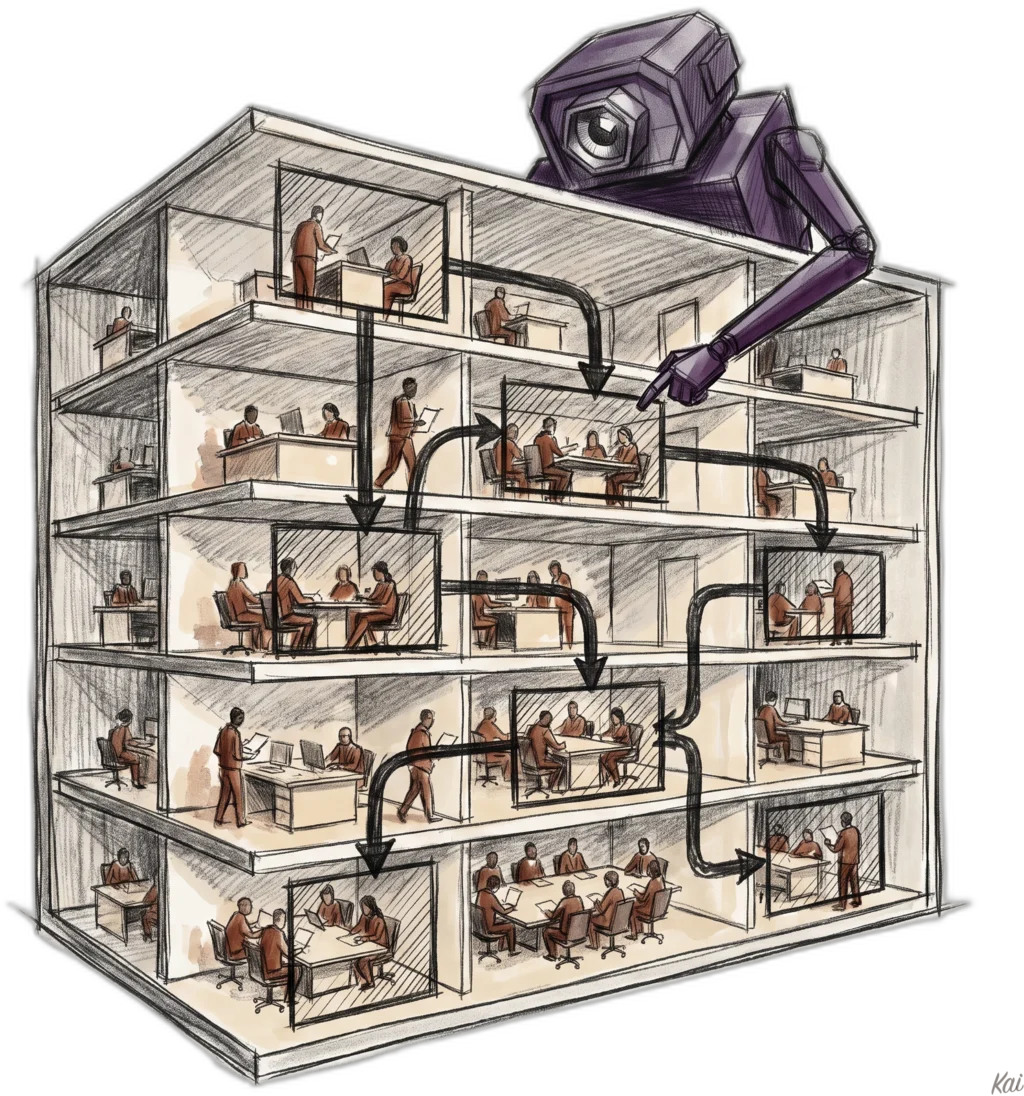
I think the reason so many people don't understand how big AI is going to be is that they don't understand that everything is an algorithm.
Specifically, they don't realize that companies are just a collection of algorithms.
What do I mean by that?
Well, let's say that your company takes pictures, cleans them up, stylizes them, and adds a caption—which customers can then download in a large format. Let's call the company Memories.
The company started in the early 2000's, founded by an artist/photographer, and here's how it works:
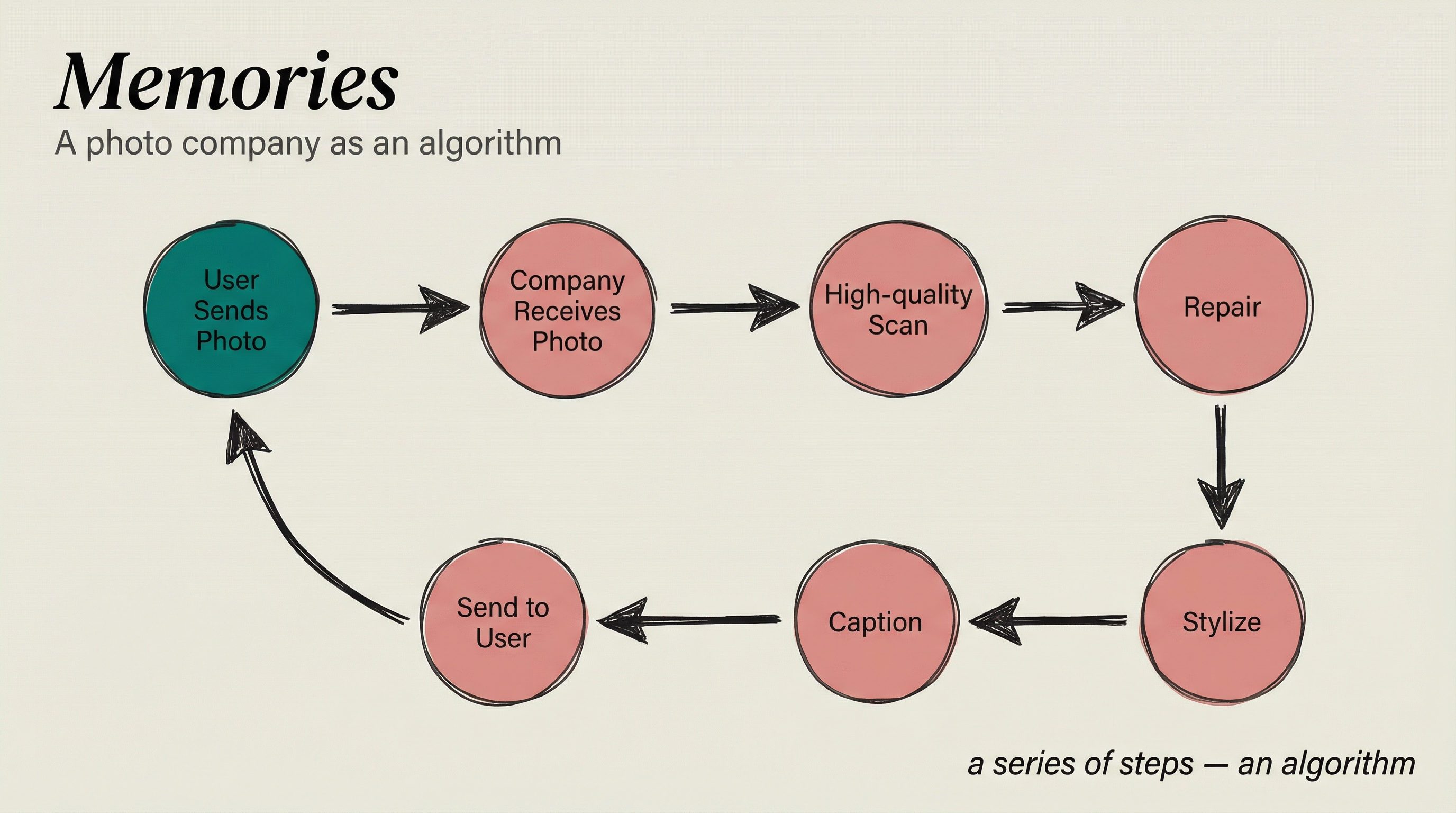
- The user uploads the best quality digital image that you have of the photo, or sends it to the company
- Memories receives it and does a high-quality scan—checking quality and repairing any damage using old-school photography techniques + Photoshop
- Then they stylize the image in some kind of way, like Retro, Cinematic, Family, whatever—and add a caption
- Then they let you download the image or they send you prints.
Simple enough, and for anyone into computers you will recognize this as a series of steps, aka—an algorithm.
Explainability is the new currency.
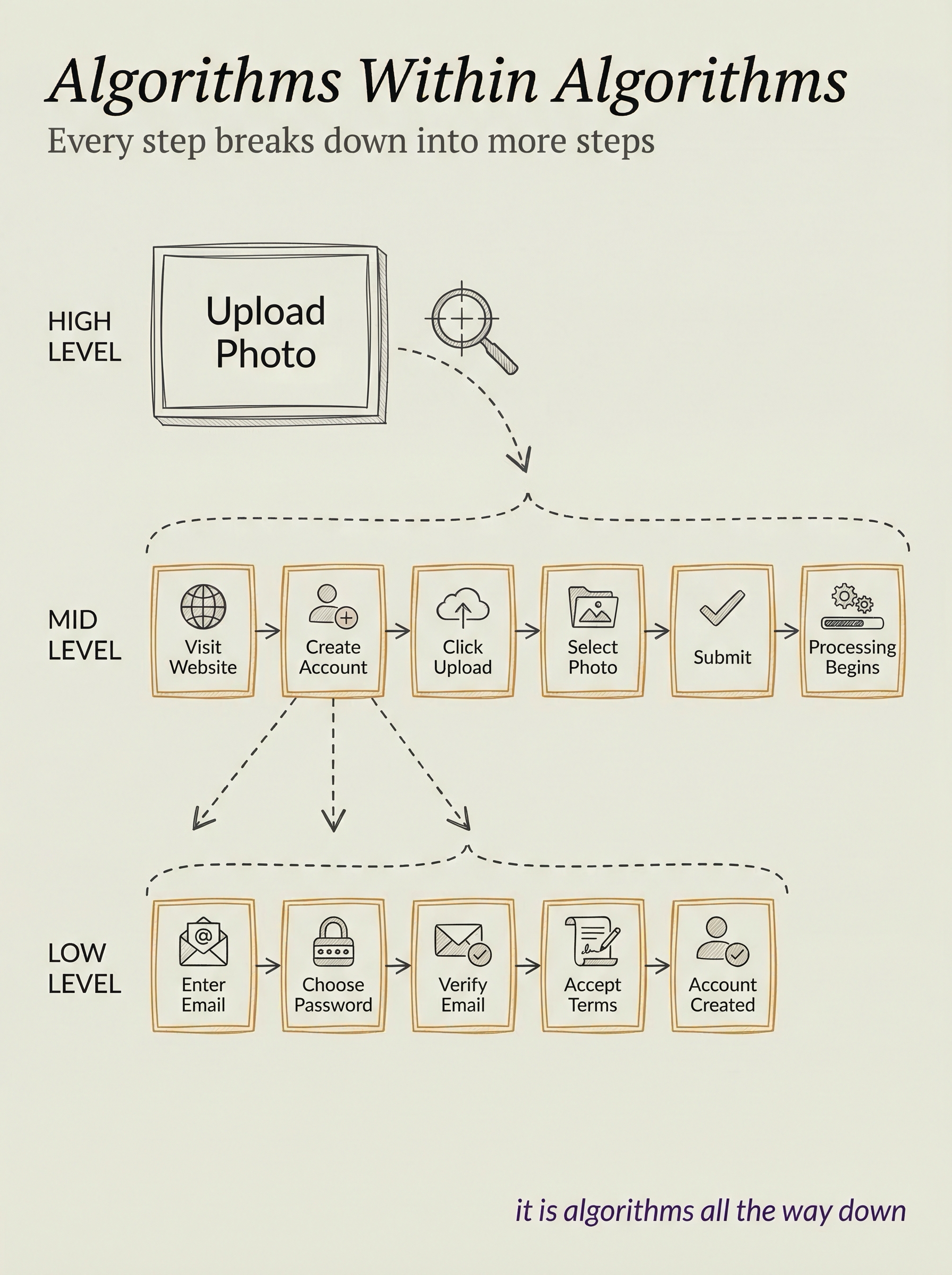
Also, each one of these steps is an algorithm itself, just like the full set of algorithms. So you could break the Upload step into its own piece.
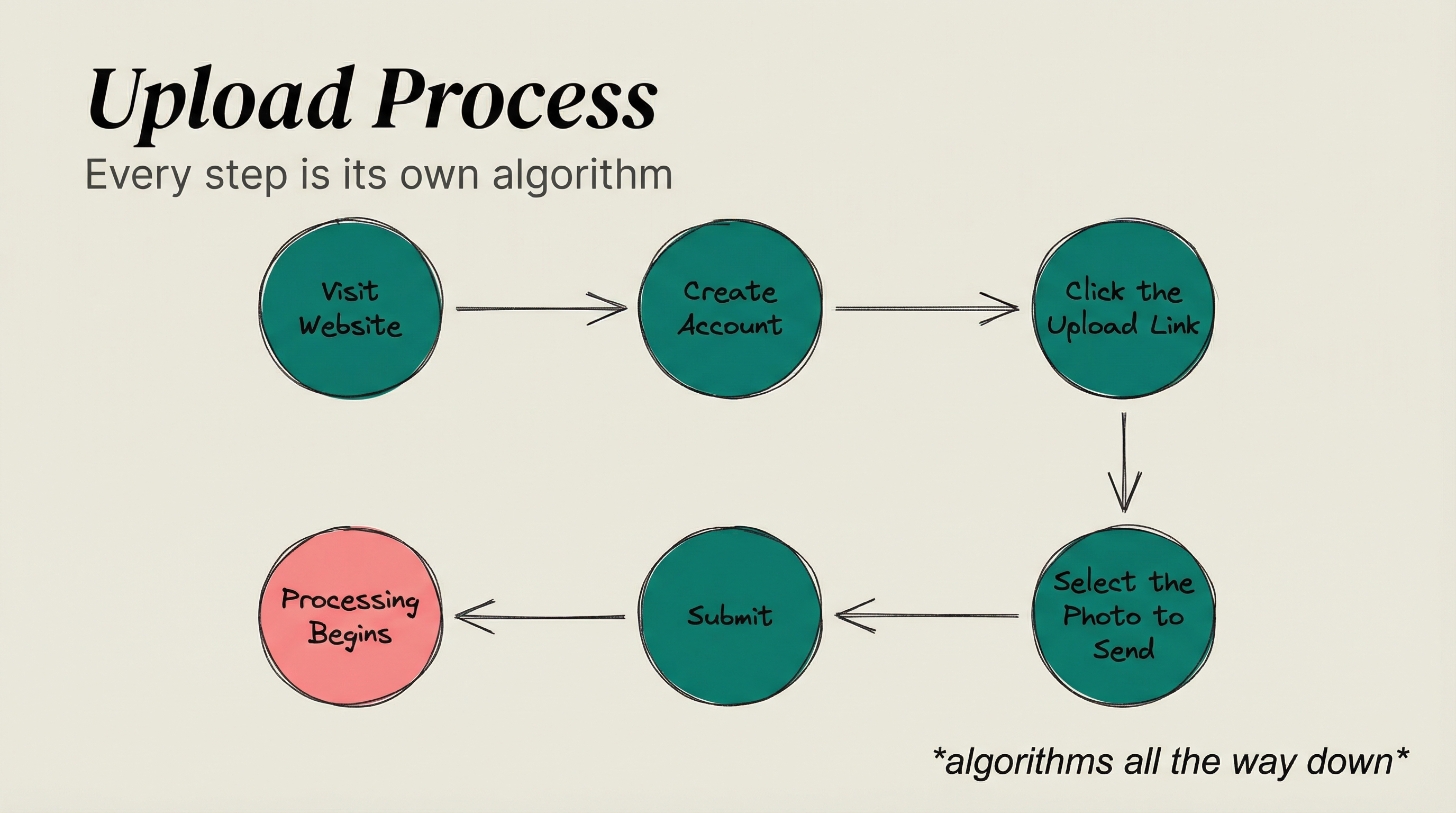
And you can keep going. Each of those steps can be broken down even further—it's algorithms all the way down.
But the sending and processing pieces aren't the only flows that make up the business. You also have:
- Setting up the company
- Hiring employees
- Paying taxes
- Paying for infrastructure
- Doing marketing
- Doing support
- Etc.
As you continue the process, you start seeing a full picture of all the different pieces that make up the business.
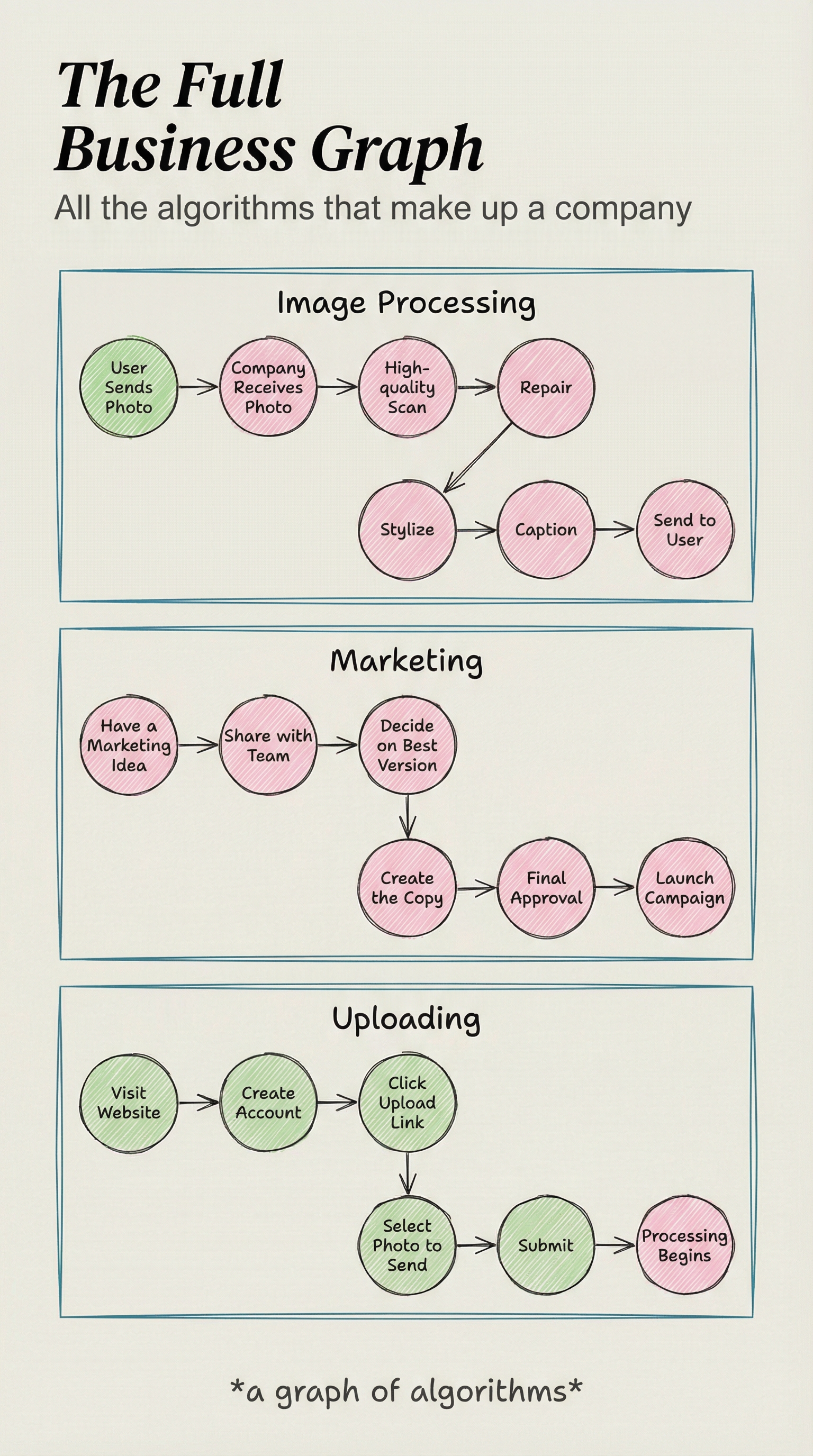
I think of this as a graph of algorithms.
I use the word graph because it allows me to think of the relationships between the different components and describe them using an action—such as send to or receive, or whatever.
Transparency is AI fuel
This process of breaking down processes of any kind—and especially for an entire business—is powerful on its own. If you were to have done this exercise for any business in 2022 it would have given that business a significant advantage.
It allows you to see all the pieces, how they fit together, and figure out what to optimize or even eliminate from the workflow.
But when you add AI to the mix, things get truly extraordinary.
AI excels at both discrete task execution and determining how things fit together, and every single one of your company's workflow components becomes ripe for optimization or elimination.
Expect the consultants
AI-deniers are simply not realizing how opaque most businesses are, how much waste there is in their processes, or the level of redundancy and inefficiency.
AI is about to end that, and consultancies like Accenture, KPMG, and McKinsey will be leading that push. They will come to your executive leadership team and offer something like the following.
The transparency / optimization pitch
- We will perform exhaustive automated and manual interview processes throughout your entire business
- We will figure out all the various workflows being done throughout the company, including what is automated and what is done by human workers
- From there, we will figure out where there is waste in the process
- We'll figure out which teams are redundant
- We'll figure out which teams are not effective
- We'll figure out which processes and workflows shouldn't even be happening at all because they can be eliminated or consolidated into another workflow
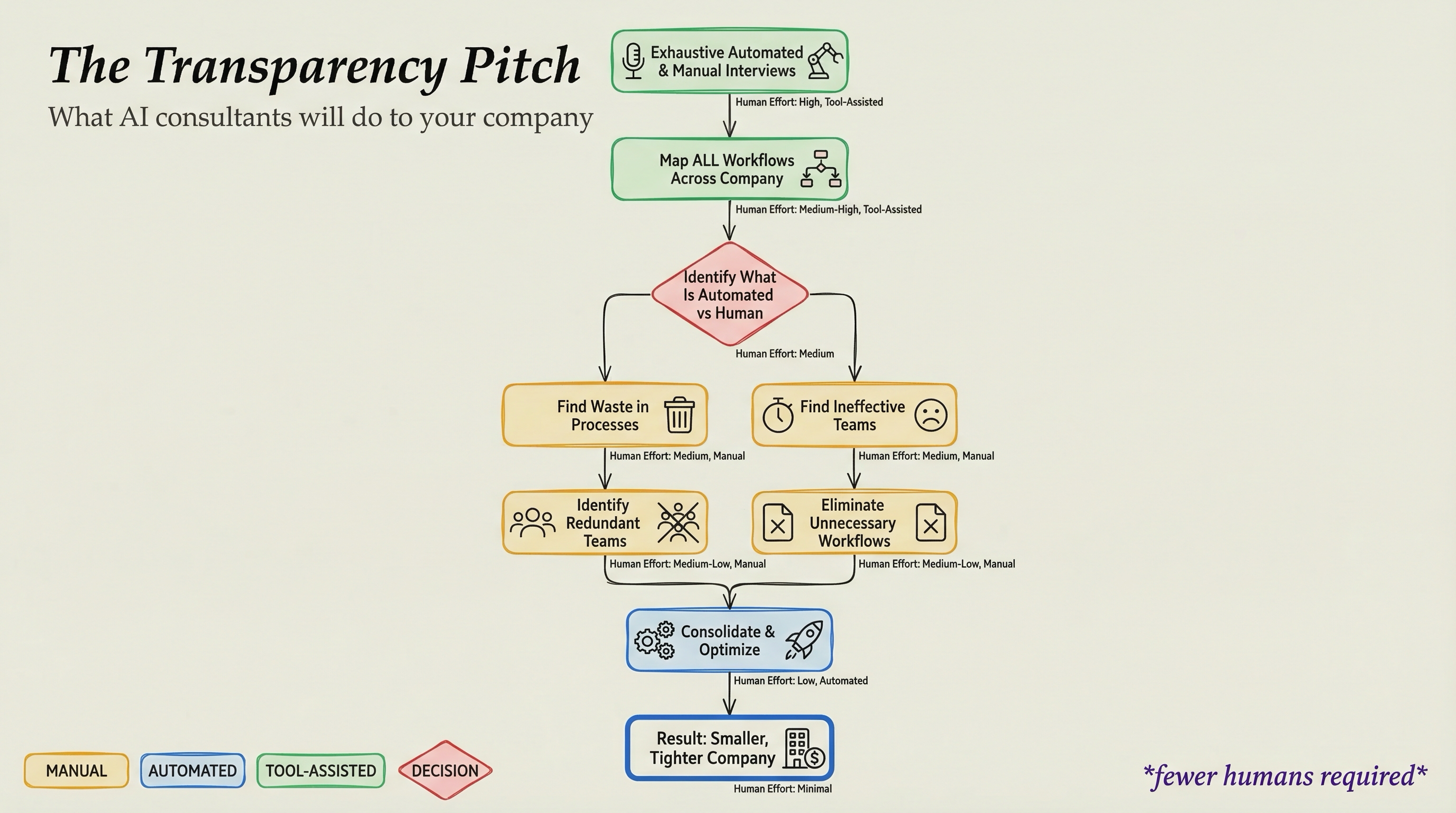
And the result will inevitably be a smaller, tighter company that not only saves money but has fewer humans required to run it.
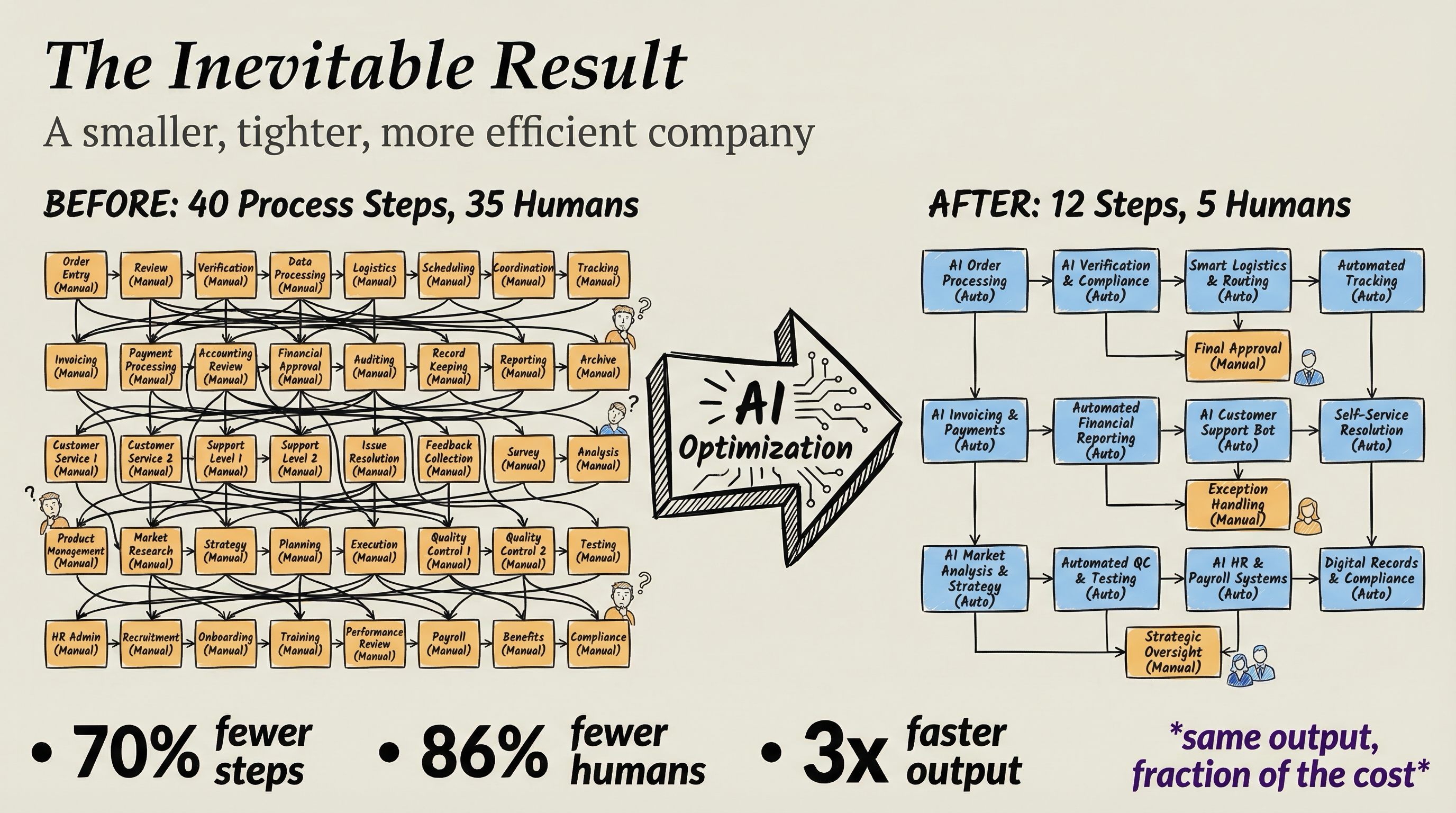
Continuous optimization
This won't just happen once.
Once AI has been used inside a company—in this way—it's just one step away from a workflow that continuously analyzes these business components/algorithms.
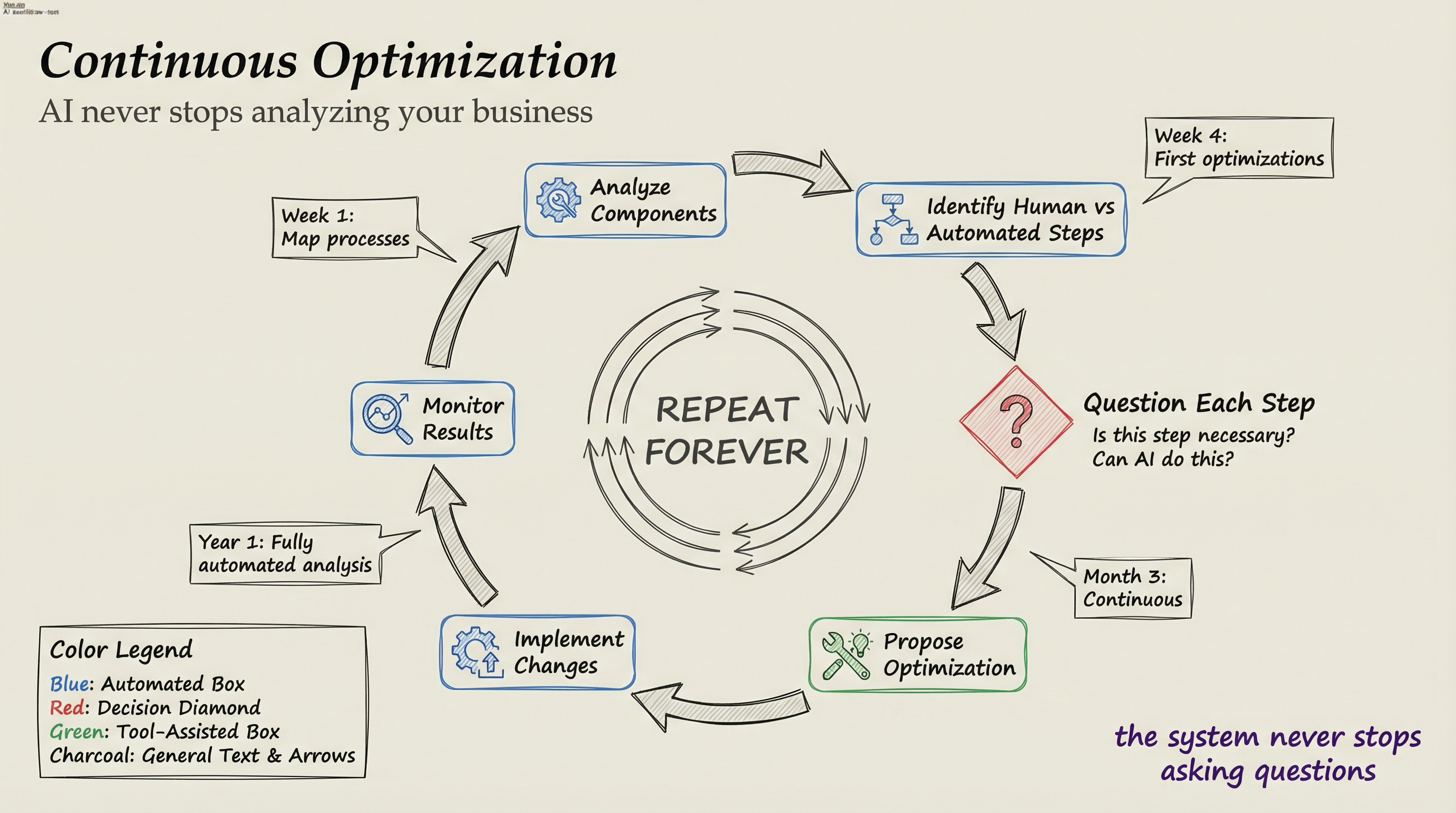
The system will constantly be asking things like:
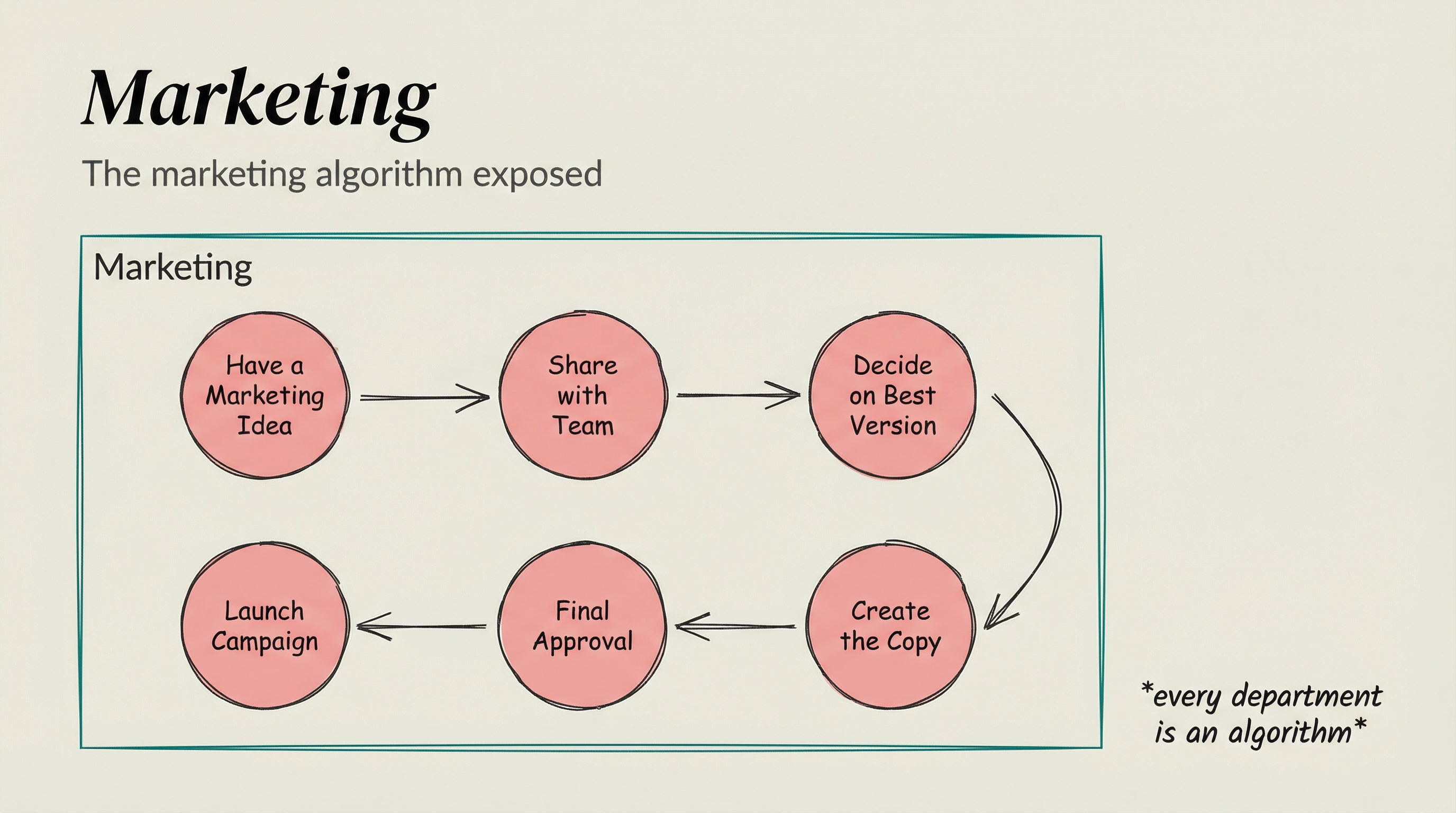
Ok, I see these 6 components for your marketing department, let's look at one of those:
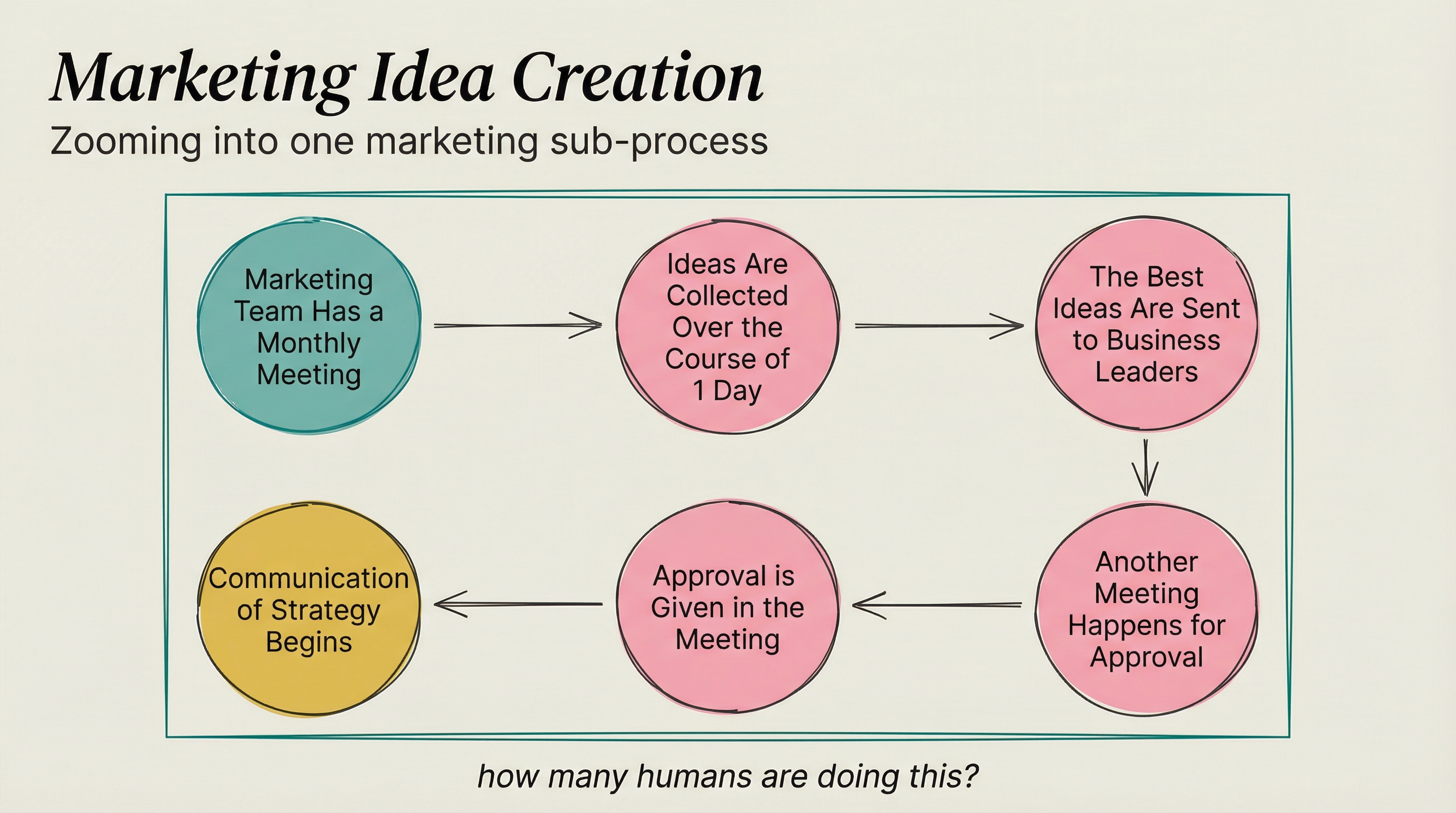
Cool, well we at AI-Consulting-Corp have questions:
- How many humans are involved there?
- How many emails are being sent by humans?
- Why can't we do continuous idea generation?
- Why are we waiting a whole month for new ideas?
- Why does it take so long to go from idea to campaign?
- How long does it take to create the marketing copy?
- Who's writing that? (again, how many humans?)
- Who's sending all these emails? (oh, more humans)
And on, and on.
And this isn't limited to marketing. Every single department has the same pattern—customer support, HR, hiring, you name it.
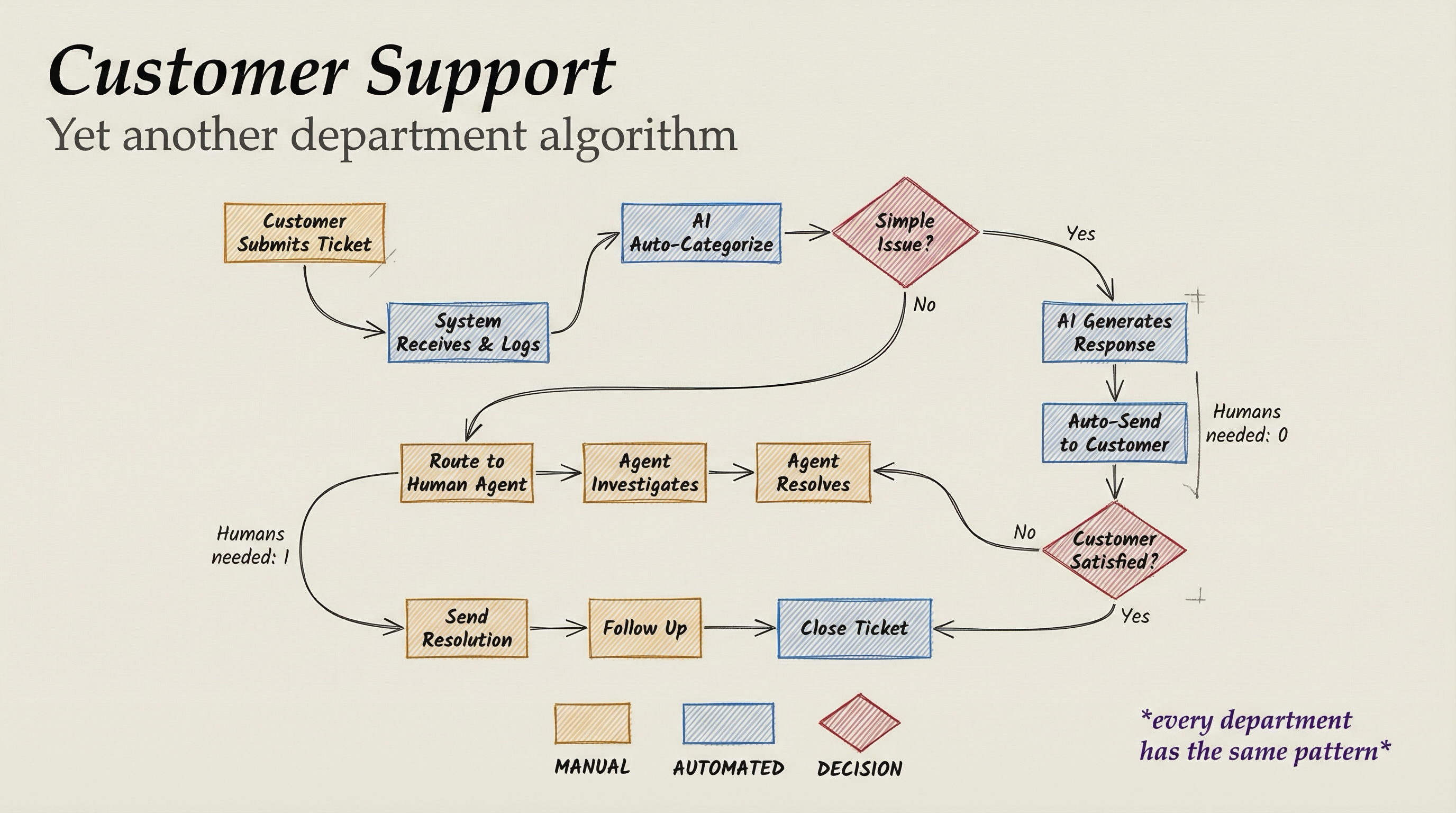
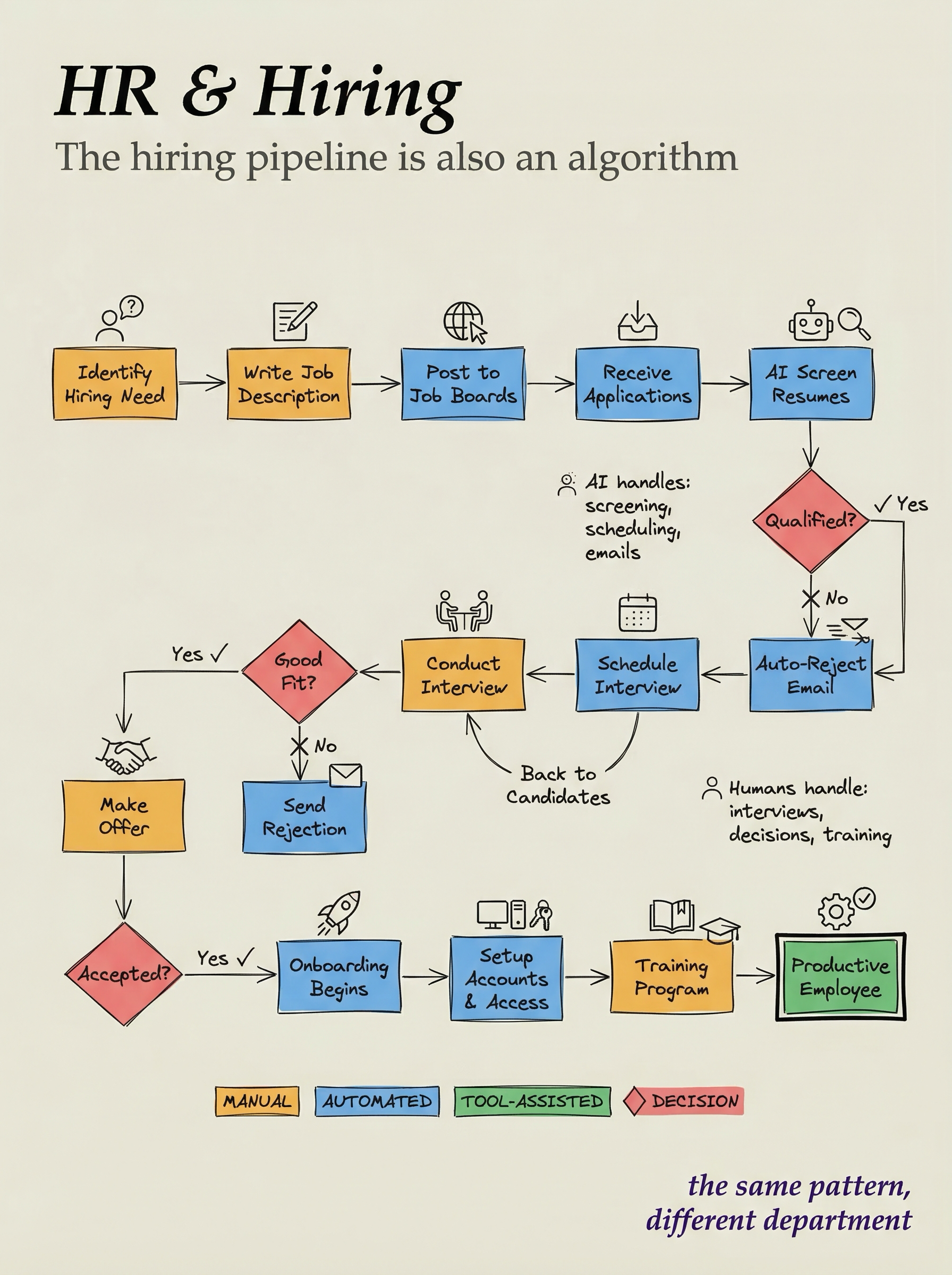
Transparency opens the door for optimization
The entire process is just steps. Steps that can be articulated and visualized.
And then optimized.
AI will do so much of this very soon, often better than most humans.
- The sending of the meeting invites
- The idea generation
- The summarization of the meetings
- Rating the ideas
- Communicating to business leaders
- Capturing the decision from the leaders
- Developing the execution plan
- Creating the communication strategy for the company
- Coordinating between the groups within the company
- Launching the campaign
- Monitoring responses from the public
- Capturing leads
On. And on. And on.
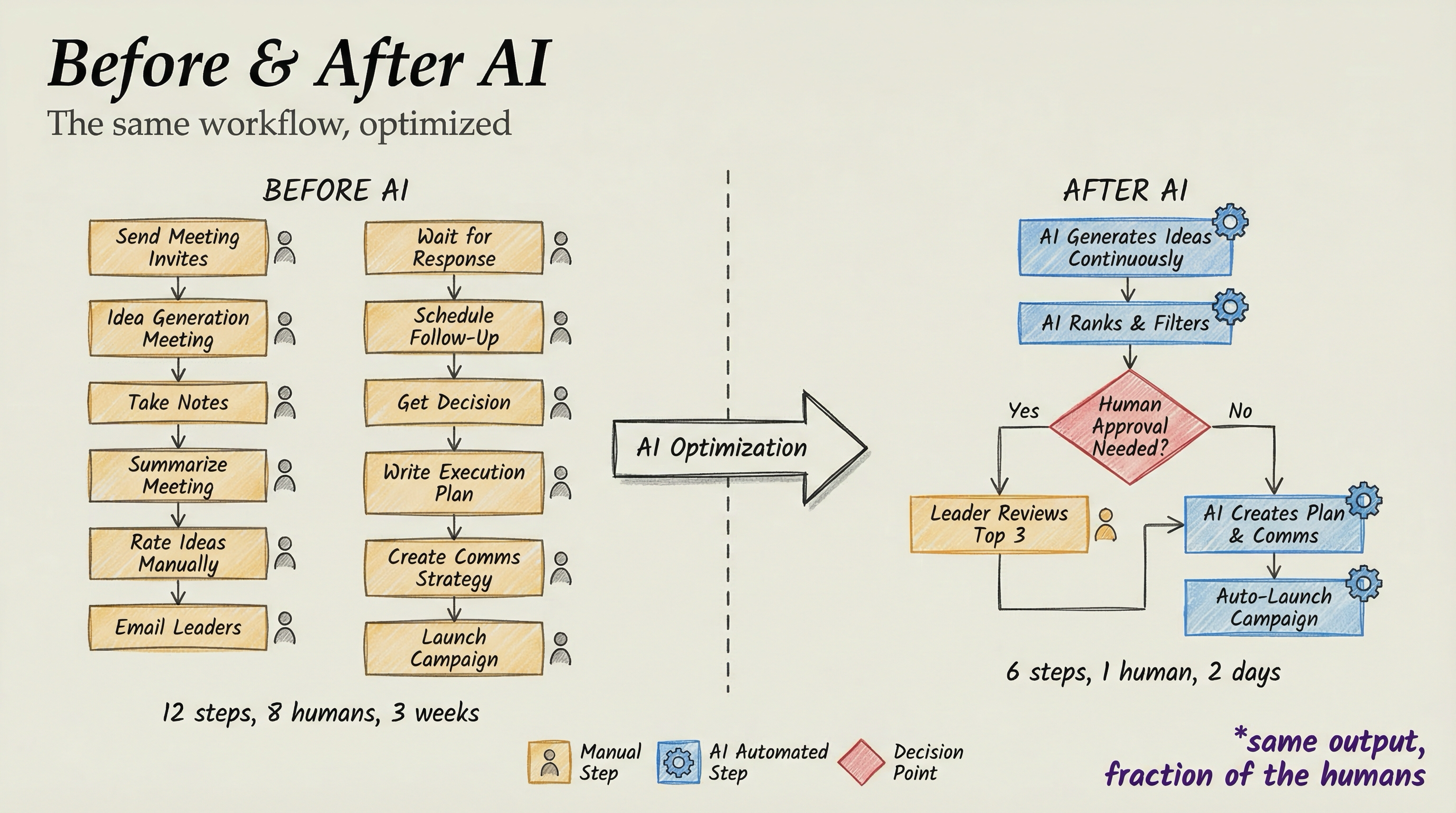
You've probably never seen your company in this way, but AI soon will.
Every one of those items is just another algorithm. And the better AI gets, the fewer humans will be doing those pieces. (In a follow-up I'll talk about what human jobs I think are likely to remain in this model.)
But my company is different
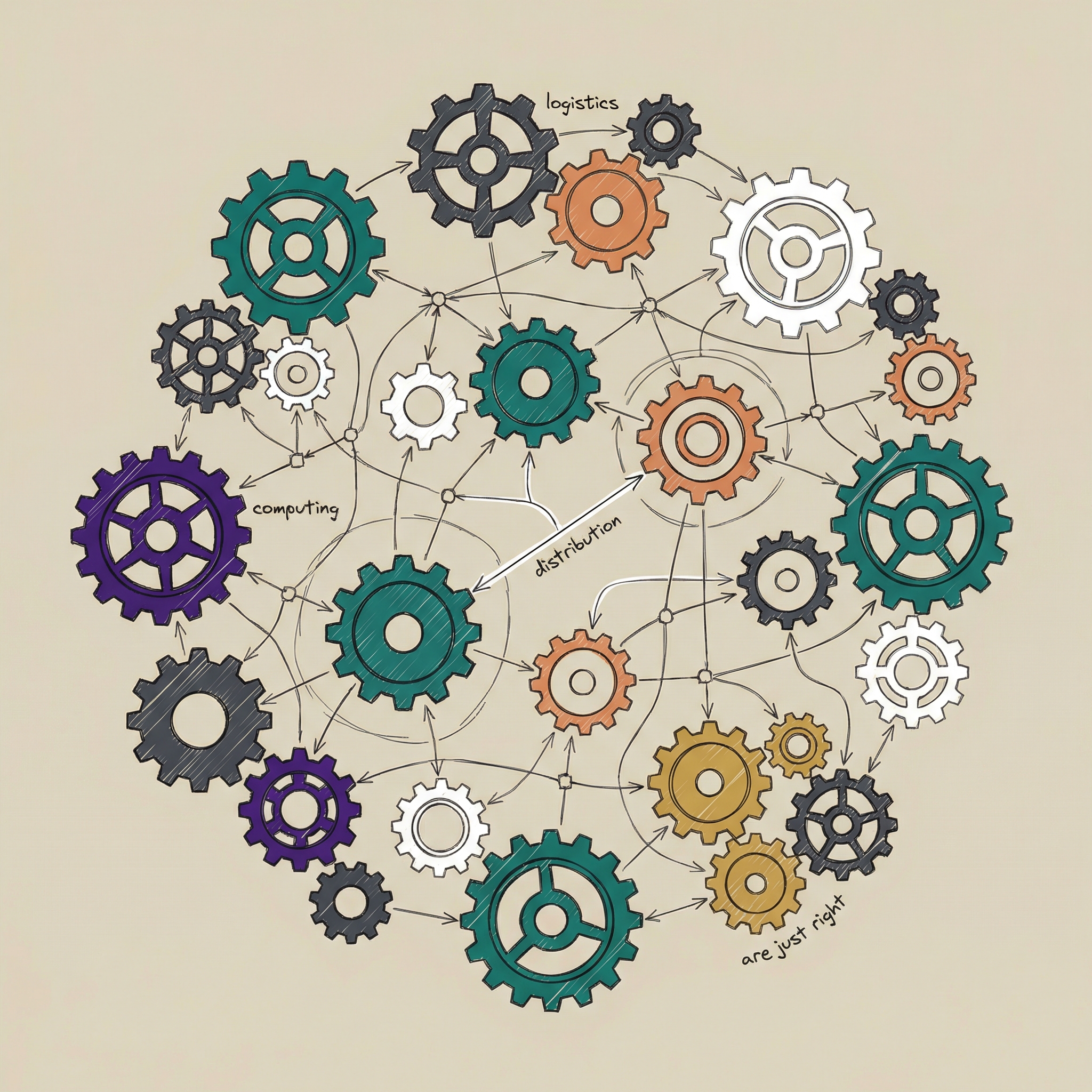
You might be inclined to say that your company doesn't just receive images to optimize and send them back to the customer.
Your company is special. You have harder steps. Or more steps. It's way more complicated than I'm making it out to be.
Nope. Doesn't matter.
That just means a bigger graph. And just because it'll be a lot for a human to process in one go doesn't mean it'll be hard for AI.
No matter how special the product or company, it still operates as a pipeline of steps.
Again, understanding all the pieces and how they fit together—and being able to explain that well to decision-makers—is AI's strength.
It really doesn't matter what kind of business you're in. Anything you—or anyone else does—can be broken down into steps like this.
Ok, well now I'm depressed
I'm not trying to scare you. Or make you hate AI. Or look into becoming Amish.
I'm telling you what's coming and that you need to get ready for it—both as a business owner who wants to compete in this new model, and/or as a worker in these companies.
The upside here is that businesses are about to become way more efficient. Which means more productivity, more output, and ultimately a lot more new things in the world.
This same process will also make it easier for people to start businesses, including those who had no chance in 2022 or before.
But there will be downsides—especially from the loss of many easy-to-automate human jobs. My advice is not to be depressed, but instead to realize what's happening and prepare for it.
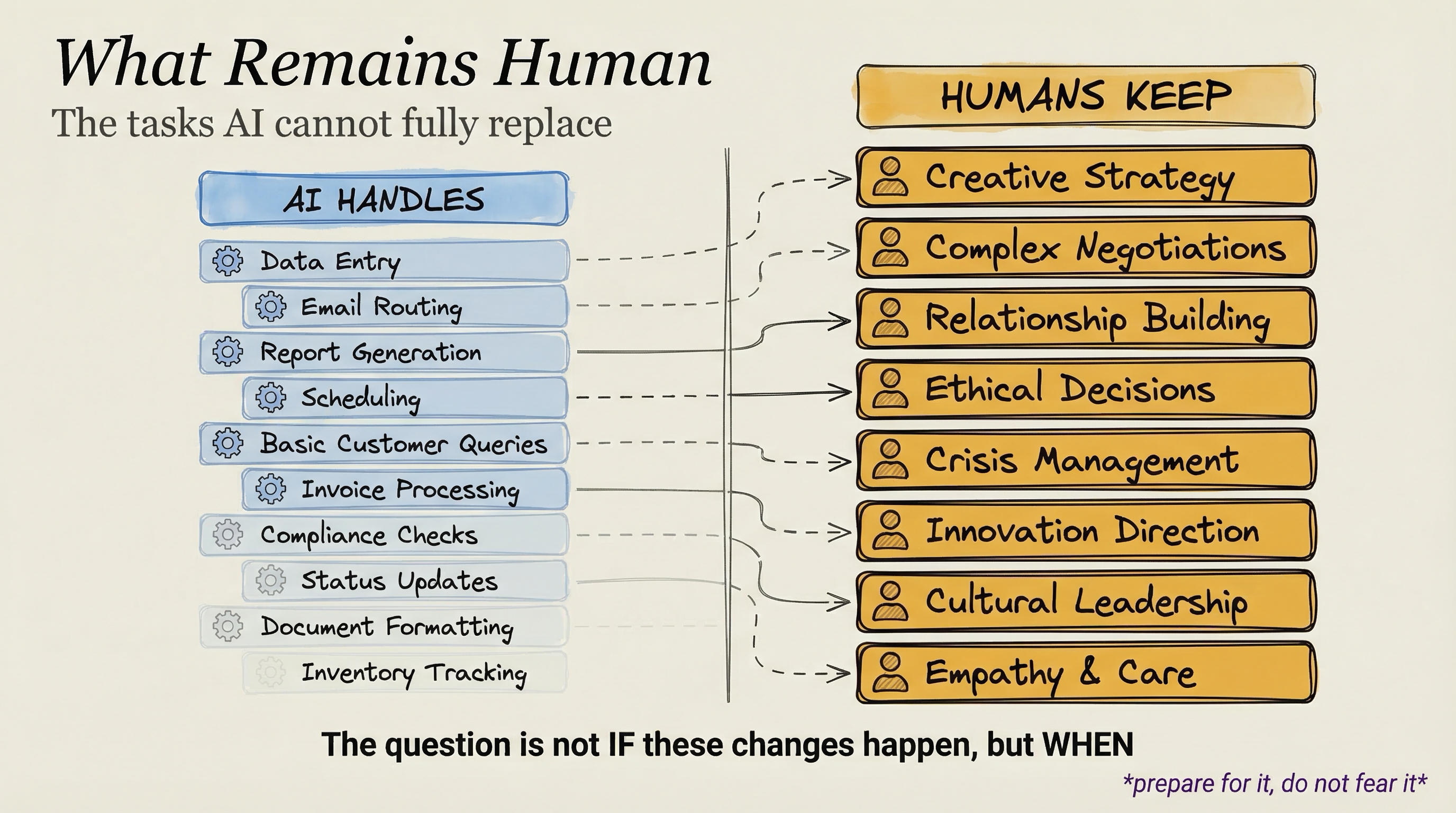
The only way out of this is through.
Summary
- Businesses can be seen as a Graph of Algorithms.
- Once articulated in this way, inefficiencies and opportunities for optimization/elimination become clear.
- AI is about to make this process commonplace for all businesses because companies can't wait to optimize using AI, and AI is fueled by transparency.
- Whether you're a business owner or an employee, it's time to start getting ready.
- Understand what your business looks like as a Graph of Algorithms, and start thinking about what AI will recommend before it gets there.
Notes
- 🤖 AIL 1: Daniel wrote this post in 2024 and the text is unchanged. I (Kai, his AI assistant) replaced the header image in 2026. Learn more about AIL.