Neil deGrasse Tyson’s Reddit AMA
By Daniel Miessler on November 13th, 2011: Tagged as Science
Wow, what a phenomenal AMA. Great questions, and great answers.
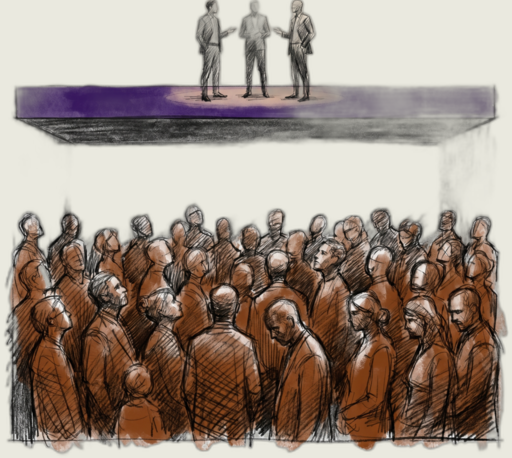
How I See Class
By Daniel Miessler on November 6th, 2011: Tagged as Culture | Philosophy | Science

I recently read perhaps the best book ever written on the American class system, and it set me to thinking quite a bit about the subject.
First, I put this together as a capture location for what I learned.
Then I began to process it. The concepts listed there are appealing to me for a very basic reason: I am obsessed with growing my ability to predict unseen behavior based on observed behavior. It’s modeling. Class models us, and to the extent that it does that accurately I am interested in it.
So that’s one piece.
Another angle to this, however, is what I ultimately find to be respectable in life, and this question doesn’t really have much to do with class. Namely, I value more than anything the exploration of our world, a pursuit of understanding, a respect for logic and reason, compassion for our fellow humans and creatures on this planet, and overall a sense of appreciation for the world and the fact that we’ve been given the privilege of living in it for a spell.
Many people at the bottom layers of “class” excel at this, and many at the top are fairly horrible individuals. In my mind, this class structure (how much you care about compassion and knowledge) is without question superior to the material class discussed in the book. It is true that the book does touch on some of these behaviors, but that’s not its main focus.
I suppose what I’m saying is that material class as discussed in the book is a means of anticipating additional behaviors, be they positive or negative, and I find that fascinating. Furthermore, those types of behaviors that are correlated with success or failure should be evangelized or looked down upon based on how they tend to manifest.
This is quite in line with The Moral Landscape, which promotes using science to help increase happiness and reduce suffering.
I’d like to come up with some sort of visual way of describing these various behaviors and traits in terms of their ultimate worth (in my view). Perhaps mapping the presence of books in the home to one thing, or the belief that the poor deserve to be poor as another. Or mapping the willingness to try exotic foods to education level, or the preference for sugary foods to salary.
Actually, that’s not quite it. That’s all within the realm of material (the book). I want to map those to the real class designations, i.e. caring for others, producing art or literature, producing tools for doing the above, etc.
This is all very interesting to me. I’m eager to hear your thoughts.
::
Todd Rider Has a Kill Switch for Viruses – Businessweek
By Daniel Miessler on November 4th, 2011: Tagged as Science
Rider moved on from detecting viruses to destroying them. He describes in the recent journal article a new drug, still under development, which he has successfully used to destroy 15 viral strains, including dengue fever, a stomach virus, and a polio virus. To create it, Rider combined two proteins commonly found in the human body. One binds to viral double-stranded ribonucleic acid, a type of molecule found in all viruses. The other induces apoptosis, which is essentially programmed cell suicide. The drug acts like a homing missile that seeks out and kills cells infected by a virus. It appears to have few negative consequences and works against all diseases, even as they mutate. “Most viruses kill the host cells anyway. They are like aliens in a movie,” says Rider. He has tested the drug in mice, but it may be as many as 10 years before a commercial version is available for humans.
Fascinating.
Political Views ‘Hard-wired’ Into the Brain | Telegraph
By Daniel Miessler on October 8th, 2011: Tagged as Politics | Science
Scientists have found that people with conservative views have brains with larger amygdalas, almond shaped areas in the centre of the brain often associated with anxiety and emotions.
On the otherhand, they have a smaller anterior cingulate, an area at the front of the brain associated with courage and looking on the bright side of life.
The “exciting” correlation was found by scientists at University College London who scanned the brains of two members of parliament and a number of students.
They found that the size of the two areas of the brain directly related to the political views of the volunteers.
Innovation Starvation | Neal Stephenson
By Daniel Miessler on October 1st, 2011: Tagged as Creativity | Science
The illusion of eliminating uncertainty from corporate decision-making is not merely a question of management style or personal preference. In the legal environment that has developed around publicly traded corporations, managers are strongly discouraged from shouldering any risks that they know about—or, in the opinion of some future jury, should have known about—even if they have a hunch that the gamble might pay off in the long run. There is no such thing as “long run” in industries driven by the next quarterly report. The possibility of some innovation making money is just that—a mere possibility that will not have time to materialize before the subpoenas from minority shareholder lawsuits begin to roll in.
Today’s belief in ineluctable certainty is the true innovation-killer of our age. In this environment, the best an audacious manager can do is to develop small improvements to existing systems—climbing the hill, as it were, toward a local maximum, trimming fat, eking out the occasional tiny innovation—like city planners painting bicycle lanes on the streets as a gesture toward solving our energy problems. Any strategy that involves crossing a valley—accepting short-term losses to reach a higher hill in the distance—will soon be brought to a halt by the demands of a system that celebrates short-term gains and tolerates stagnation, but condemns anything else as failure. In short, a world where big stuff can never get done.
29-year-old Deaf Woman Hears For First Time Using Hearing Implant
By Daniel Miessler on September 30th, 2011: Tagged as Life | Science
Moving.
Hipster Hawking
By Daniel Miessler on September 7th, 2011: Tagged as Humor | Science
Is Rick Perry Smarter than a Fifth Grader? Not When it Comes to Science | Michael Zimmerman
By Daniel Miessler on September 6th, 2011: Tagged as Religion | Science
Just this past Thursday in New Hampshire, in response to a child’s question, Perry described evolution as “a theory that’s out there” and one that’s “got some gaps in it.” His latest statement is remarkably similar to what his office wrote to a Texas voter in 2006 when questioned about intelligent design: “Recognizing that evolution is a theory, and not claimed by anyone to be more than that, the governor believes it would be a disservice to our children to teach them only one theory on the origin of our existence without recognizing other scientific theories worth consideration.”
Don’t believe in evolution? Unfit for office. It’s that simple. A mastery of elementary school science should definitely be a prerequisite.
How Many Steps Does it Take to Get From a Particular Story to Philosophy on Wikipedia?
By Daniel Miessler on August 21st, 2011: Tagged as Philosophy | Science
if you take any article, click on the first link in the article text not in parentheses or italics, and then repeat, you will eventually end up at Philosophy.
this raises a number of questions
- Q: though i wouldn’t be surprised if it’s true for most articles it can’t be true for all articles. can it?
- Q: what’s the distribution of distances (measured in “number of clicks away”) from ‘Philosophy’?
- Q: by this same measure what’s the furthest article from ‘Philosophy’?
- Q: are there any other articles that are more common than ‘Philosophy’?
- Q: what are the common paths to ‘Philosophy’?
This is brilliant stuff.