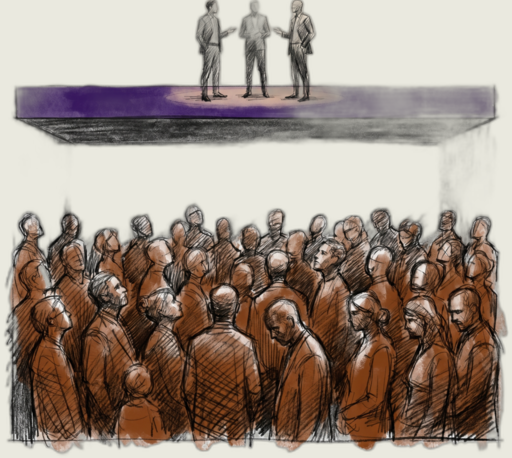
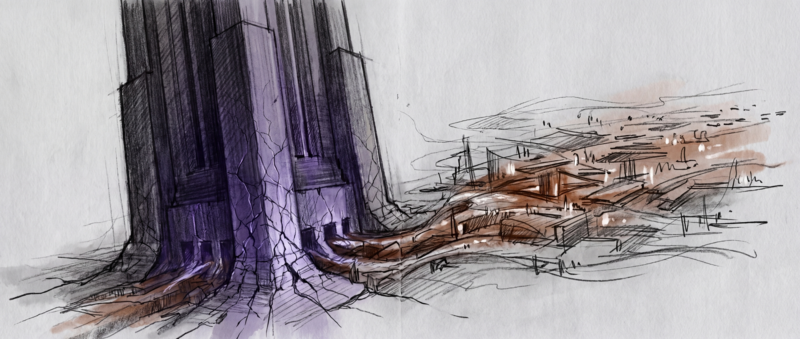
A brilliant description of the life I have long vowed not to have.
One thing that bothers me severely is the concept of a conditional friendship. There are a few ways these come about, but the most common way I see is through in-law family bonds.
I think this problem is particularly bad in the South, although I’ll happily admit the only place I’m comparing it to is the West, which is where I’m from. I’ve seen in a too-large number of instances where the families of a woman, for example, would open up and accept the woman’s husband.
The level of acceptance is one of the positives of the South. It’s absolute. Come, eat our food. Take our gifts. You are family. It’s seriously a beautiful thing. It’s as if that person becomes true family, with friendships being formed nearly as strong as between those who are blood-related.
That is, until they break up.
Let me speak plainly. If a deep love or friendship between a father-in-law or mother-in-law can be revoked for life, due to a breakup between the son-in-law and the daughter, there never was a friendship to begin with. It was conditional–conditional on two people being married.
Imagine being willing to die for someone one day, and the next day they’re not welcome to eat in your home, or to call you on the phone. This is a sickening distortion of human kinship.
And let’s be clear, I’m not talking about a situation where the breakup came with extreme circumstances. I mean, if there was some sort of adultery or violence or something–it’s understandable that this could affect friendships outside of the two involved. No, I’m talking about amicable separation, where the peripheral relationships have no real reason to end other than that of convenience.
My view is that if I am a father, and my son or daughter brings a human into my house with whom I’m expected to forge a relationship with, that child does not have the right to tell me when to terminate said relationship. Again, if this person were to do something negative to my child I would have my own reasons to dislike them, but when I create a friendship–for any reason–I consider that a life bond that can only be broken by the most extreme of circumstances.
Build real friendships. Don’t let external conditions (marriage, work, or the people who subscribe heavily to those constructs) dictate when those friendships should begin or end. ::
No. Kthxbai. ::

We all have a problem keeping up with friends and family that have moved away. The problem is simple: we, as humans, can only have so many relationships as priorities in our lives, and we naturally move the people we can see and interact with to the top of our lists.
To put it more strongly, people who have moved away become concepts, or abstracted representations of real people. When we think about them we remember what they used to be like, and we consider re-pinging them to see if they’re still “alive”. This represents an invisible obstacle, one that sadly keeps many from contacting each other for years or decades. It literally becomes a “big deal” to track down and reach out to someone who’s lost their tangible status in your mind.
Twitter works because it proves to our subconscious, even if only temporarily, that your extremely close friend that moved away four years ago is in fact still real and tangible. It removes the contact barrier and makes them approachable.
Of course, this is what all social applications strive for. The difference is that most social apps struggle with two things: they require users to be at a computer or to use a mobile email client. They have barriers to contact, in other words.
Twitter, on the other hand, by having the deepest personal penetration (mobile phone) combined with the most ease of use (text message), has an effort rating that falls below most people’s natural resistance to participate, and its positive reward ratio is much higher because people are far more likely to respond to a text message than almost anything else.
That’s why Twitter works: it has a low enough friction to overcome the resistance to use it, and has far more chance of achieving interactive success because it penetrates all the way to the recipient’s mobile phone via text message. Once these two things are achieved you’ve done what all social technology is meant to do: it strengthens the connections between people. ::
[ Men want women to be more traditional - and women 'are HAPPY to be the housewife' | dailymail.co.uk ]
Awesome, although I think it should be called, “A Bridge to Adultery.”

I find it highly peculiar that most Americans find it perfectly normal for a 25-year-old woman to be getting divorced for the first or second time, but treat the same woman like a leper if she isn’t yet married. This is especially true in the highly religious South.
Relationships by marriage don’t work, just as morality by fear of God doesn’t. It’s an artificial union — one far more likely to break than the real thing. Why is it that atheists have lower divorce rates and are virtually unaccounted for in prison?
I think it’s because when you’re moral just because it’s “right”, it means much more than when you’re moral because someone told you to be. And it’s the same for marriage. When you’re in a relationship just because you want to be, rather than because, “that’s what you’re supposed to do”, you tend to have higher quality relationships.
And that’s what you see in the south. Everyone is married with children because, “that’s what you’re supposed to do.” It amazes me to see virtually no single people over 25 in the south. If you do see one you know one of two things:
And it’s not just the south; it’s anywhere that’s highly conservative/religious. Yet those are the same areas with the highest divorce rates, domestic violence, teen pregnancy, and all sorts of other ailments. 1 Doesn’t that make sense, though? It’s artificial morality enforced by a diseased culture, and that’s why it’s failing.
More truth from the Onion.
I’ve received a myriad of comments about my Bimbo/Caveman essay, including some from my fiance. Many were quite positive, but the majority were negative. What I saw being reflected back to me was a clearly misogynist overtone, which was not the goal of the piece.
As such, I’ve spent some time rewriting it tonight and am happier with it now. I’ve kept the key points and have hopefully eliminated the portions that were easiest to misinterpret. Comments are welcome:
tcpdump Tutoriallsof Tutorialfind and xargsDaniel Miessler | 1999-2010 | Share Alike