The Only People Fighting Are People I Don’t Want to Win
By Daniel Miessler on January 10th, 2010: Tagged as Politics | Religion
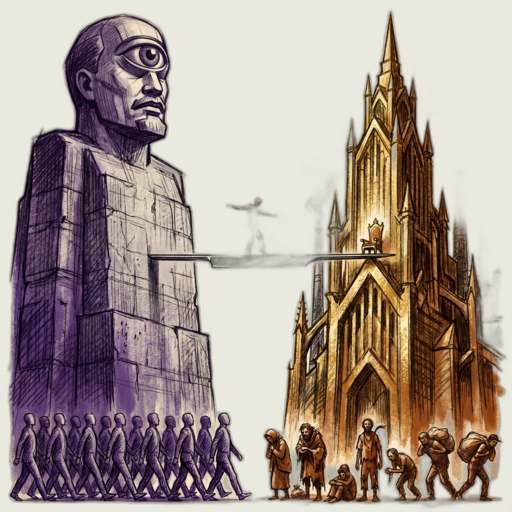
Why is it that it seems most of those who are smart enough to identify radical Islam as a worldwide threat are likely to be highly Christian neocons who are nearly as dangerous themselves?
You want to support those with the courage to speak out against the dangers of hostile Islamification, but once you see these same people holding Bibles you’re forced to think twice.
We need more progressive thinkers who are willing to take decisive action toward stopping the spread of intolerance, but fewer of those who seek to fill the vacuum left behind with their own brand of malignant superstition.
Adam Smith on the Rich and Poor
By Daniel Miessler on January 10th, 2010: Tagged as America | Politics
This disposition to admire, and almost to worship, the rich and the powerful, and to despise, or, at least, to neglect persons of poor and mean condition…is…the great and most universal cause of the corruption of our moral sentiments.
Add Adam Smith to the list of people neocons use as a reason to be selfish, and who are actually a thousand times more balanced towards the left than they realize.
Reddit’s Interview of Christopher Hitchens
By Daniel Miessler on January 9th, 2010: Tagged as Politics | Religion
Free Will and Punishment
By Daniel Miessler on January 6th, 2010: Tagged as Culture | Philosophy | Politics | Religion

It seems to me that the decision, both as an individual and as a society, to either punish or rehabilitate criminals hinges on the degree to which the former believes in in free will vs. determinism. In short, if you believe in free will, you believe that one can have all the disadvantages in the world heaped upon him or her, but that when it comes time to make a moral decision, this person will be expected–due to an innate and distinct free will–to make the right decision.
You can draw a line directly from this belief to that of belief in punishment. And for good reason: if inputs into a decision, such as being severely beaten as a child, being raised by foster homes, having no education, etc. have no ultimate effect, i.e. if the individual still has complete control over their actions due to free will, then it makes sense to punish people who do bad things.
Let’s take an example. Let’s say Chris is a bad guy. He runs with the wrong crowd, gets in fights, carries a knife in case he has to stab someone, etc. He’s hanging out with his buddies at his favorite pool hall one night, and he’s with a girl he’s trying to get with. All his buddies are thugs, basically, and honor and respect are the primary currency within the group.
Well, one guy in another group playing pool nearby decides to insult the girl he’s trying to impress. His whole crew sees it, and they start hooting and hollering to apply pressure. Basically, he needs to react aggressively or he will lose both the respect of his group and of the girl he’s trying to get with. While he’s trying to decide what to do, the other guy pushes him straight in the chest and spits in his face. As he glances from side to side he sees one look on everyone’s face: “Are you going to take that?”
He is overwhelmed by the urge to attack him, and before he knows it he is drawing back his pool cue (still in his hand from his last shot) to strike.
Stop time.
What are the inputs here? Let’s say he’s genetically prone to violence. He had no loving parents when he was a child. He was beaten constantly by his father before he was abandoned by him. He has a 6th grade education. And he’s into drugs and alcohol. Add that to the dynamic of needing to maintain status within his only peer group–all of which are staring at him and waiting for him to act.
These are all truths. They are realities that make up the variables leading to a decision of whether or not he will hit this other man with a pool cue, and ultimately go to jail.
The question I have for the free will group is, “what is the strength of his free will in this situation, and how much does it matter?” Does he have the same free will as a Harvard grad in the same scenario? In other words, if a Harvard grad is in the same situation, and he immediately grabs his girl and leaves while calling the cops, was he actually more moral or did he just not have the same pressures to commit the negative action?
Remember, the Harvard grad has options. His girl will still stay with him if he doesn’t get in the fight, and his friends will tell him he did the right thing. Plus, he knows all the implications of his actions. He has much to lose if he gets something put on his police record. None of these things apply to Chris. In fact, they apply in the opposite direction. Everything leans toward him attacking being the right thing to do–given his situation.
In other words, how much free will is needed to make a correct decision seems highly dependent on the pressures that exist already–most of which are products of variables outside the control of the decision-maker.
The Harvard grad didn’t make a difficult decision because he had so many options. Chris, on the other hand, didn’t have any options. From his genetics to his upbringing to his immediate surroundings–he basically had no option but to attack the guy.
To look at it another way, how much free will does a human exert when deciding not to eat? A lot. How much free will does a human exert when deciding not to fly like a duck? None. Why? Because there is no natural pressure to fly like a duck. Along those same lines, how tempting would it be for a man to sleep with the hot blonde he just met if he had been castrated? Not at all.
The point is that will is tied directly to deterministic pressure to act. And the more of that pressure you are facing, the less, your “will” is a factor in your decisions.
That is, unless you’re highly religious. Religion solves this science and nature problem by saying that all people have the same option to make the right choice, regardless of whether the cards are stacked against them or not. That would explain why the religious enjoy seeing criminals suffer so much–because they believe they had THE OPTION to do the right thing.
And it really goes all the way back. Let’s take the Garden of Eden narrative. Here you have God, controlling the entire environment. The laws of physics, the desires of Adam and Eve, the desirability of the tree, the presence of the snake, etc. So he creates a piece of fruit on a tree that’s so dangerous it will kill him (and everyone in the whole world after him).
Not only does he create the fruit, but he gives Adam both the eyes to see it with, as well as the desire to eat it. Then, next to him, he creates two other beings–both of which try and convince him to eat it. Keep in mind that Adam could have been created without ears, so he couldn’t hear Eve and the snake, but that would be too easy.
So, when Adam is about to take a bite of the apple, what is the balance of natural pressure vs. free will at that moment? I’d argue it’s much the same as the balance of pressure on Chris when he’s about to swing the pool cue. In both cases the deck is completely stacked. In Adam’s case, the creator of the Universe just put a tasty fruit right next to him, along with two companions to convince him to eat it. For Chris, he’s facing a world of loneliness and rejection if he doesn’t swing.
Anyway, enough analogies. The idea of punishing criminals because “they had a choice” is, as the Hacker’s quote goes, “Universally stupid.” And the alternative narrative is simple: you do what the variables say you’ll do. That’s why most rich people come from a world of advantage, while most poor and criminal types come from a world of disadvantage. If you need more evidence, look at the data on common characteristics of serial killers’ lives (hint:abuse).
And some people get this. The Scandinavian countries tend to rehabilitate rather than punish. Why? Because they understand that negative inputs lead to negative outcomes, and that the concept of free will is little more than a practical necessity at this point in our development–and certainly not something to base a criminal justice system on.
So let’s sum up with some oversimplifications:
- Religion –> a belief in supernatural Free Will
- Free Will –> the belief that criminals deserve suffering
- Secular –> Less/No Religion
- Less/No Religion –> Less/No belief in supernatural Free Will
- Less/No belief in Free Will –> more belief in determinism
- Belief in determinism –> belief that the prosperous are lucky instead of virtuous, and that the poor and criminal are unlucky instead of evil or lazy
- This leads to a desire to elevate the variables for everyone, so that the better inputs will lead to better outputs
…which is progressivism/liberalism/socialism.
…which is why the Scandinavian countries are less into the idea of criminals being “bad”, and more into re-education and rehabilitation. So, once again, the U.S. is being hamstrung by religious culture. It is the belief in free will over determinism that leads to the entire concept of “deserving” something, e.g. riches or suffering. And it has to end if we want to make any real progress. ::
Andrew Gelman Talks Voting Patterns and Income
By Daniel Miessler on January 2nd, 2010: Tagged as Culture | Politics | Religion
Happy families are all alike, but unhappy families are unhappy in different ways. –Tolstoy
My Summary / Notes
- People in the top 50% of income vote differently based on the state they’re in, e.g. they vote Republican in Texas and Democrat in Connecticut.
- Overall, rich people tend to vote Republican
- Democrats win rich states, Republicans win rich voters.
- Lower-middle class people vote similarly in both red and blue states, but richer people in these same states vote differently.
- The lower income you are, the less difference religion makes in your voting. In other words, among richer voters church attenders are far more republican than secularists, but among poor people not so much. This gives support to the idea of post-materialism, where rich people have the luxury of thinking about higher-order issues than poor people.
- Some confusion from the media comes from the fact that most writers come from parts of the country that don’t have major differences between the parties.
- The largest differences between red and blue states are occurring within the upper-middle class.
The rich vote true interests, while the poor vote god, guns, and gays. (paraphrase from multiple sources)
My favorite quote, made during the question period, was on the topic of the range of differences between left and right in other developed countries vs. in the U.S. A questioner asked if he’d looked at any other countries, like in Europe, that have much wider divides between left and right.
Dr. Gelman responded by saying that in fact the U.S. has a much larger gap between the two sides than most any other country. He went on to add that in this context, California and the Northeast are like Europe, and the south is like Mexico.
Anyway, really cool stuff. The data succeeded in changing my model, which made it highly valuable. Did it surprise you guys in any areas? ::
Christopher Hitchens on Airline Security
By Daniel Miessler on December 31st, 2009: Tagged as Politics | Security
What nobody in authority thinks us grown-up enough to be told is this: We had better get used to being the civilians who are under a relentless and planned assault from the pledged supporters of a wicked theocratic ideology. These people will kill themselves to attack hotels, weddings, buses, subways, cinemas, and trains. They consider Jews, Christians, Hindus, women, homosexuals, and dissident Muslims (to give only the main instances) to be divinely mandated slaughter victims. Our civil aviation is only the most psychologically frightening symbol of a plethora of potential targets. The future murderers will generally not be from refugee camps or slums (though they are being indoctrinated every day in our prisons); they will frequently be from educated backgrounds, and they will often not be from overseas at all. They are already in our suburbs and even in our military. We can expect to take casualties. The battle will go on for the rest of our lives. Those who plan our destruction know what they want, and they are prepared to kill and die for it. Those who don’t get the point prefer to whine about “endless war,” accidentally speaking the truth about something of which the attempted Christmas bombing over Michigan was only a foretaste. While we fumble with bureaucracy and euphemism, they are flying high.
How Norway Defeated MRSA, and Why The U.S. Won’t Be Able To
By Daniel Miessler on December 31st, 2009: Tagged as Culture | Politics

First, the article. Check it out before you continue.
–
To begin, it’s worth nothing that it was a government-run healthcare program that accomplished this. It was smart people looking out for the greater-good of the people, which is what government is supposed to be.
I am not a healthcare expert, but I’d say the reason this is not happening in the United States is because “greater-good” sits not in the back seat of our government, but in a trailer being pulled behind the vehicle. On the back bumper of the trailer. Basically, it’s the greed/ignorance problem all over again. Physicians in this country would face immediate repercussions if they were to tell a patient, “You’ve got a cold: take a Tylenol and suck it up.”
As I just mentioned, there are two components to this failure: greed, and stupidity. The stupidity is championed by the patient, where he/she becomes indignant at being denied powerful medicine (antibiotics) for a runny nose or body aches. This spirals into accusations of racism, classism, ism-ism, etc. First the business suffers due to word-of-mouth, then the lawsuits come.
And that’s where the greed comes in. Lawyers and drug companies have a vested interest in seeing the maximum possible drugs being prescribed. And the lawyers really like to hear about people getting sick when Doctor’s supposedly didn’t do enough to help them–especially if they’re poor or have a minority status. That’s lawyer lifeblood.
So, naturally, doctors choose to prescribe antibiotics for runny noses. They throw everything at a problem to make it seem to the idiot that they are doing everything the can, and to keep their lawyers from having anything to stand on. And the public suffers.
It’s a battle we’re losing. On one side is stupidity and greed, and on the other is logic and practicality. Norway no-doubt had similar pressures from some patients while family members were suffering from the flu, or a severe cold. I’m sure some of them accused their doctors of callousness or of withholding treatment. But those accusations never gained kinetic force because the general education of their peers was high enough to quell it. Basically, they went to their friends and said, “This damn doctor didn’t give me my antibiotics for my cold. He’s a bad doctor.” And their friends said, “Dude, you’re an idiot. If he gives you that many people might die from resistant bacteria.”
In the U.S. that doesn’t work because the complainer’s friends are much more likely to say, “We can probably get some free money if we sue him for discrimination.” Not necessarily even out of malice–so few people willing to make this lawsuit are educated enough to know that a doctor would be right to deny antibiotics. According to their view (which is wrong), they’d be justified.
And that’s the problem. The ratio of intelligent to stupid, educated to ignorant, and greedy to altruistic is crucial. This is the balance that is accelerating in the wrong direction for the U.S. And it’s this that scares me most. It’s the reason our politics are going sideways, it’s the reason our education system is in shambles, and it’s the reason our economy is on the edge of ruin.
Happy new year. ::
Gallup: Religious Intensity Remains Powerful Predictor of Politics
By Daniel Miessler on December 13th, 2009: Tagged as Politics | Race | Religion

This Gallup analysis shows some interesting things about race, religion, and politics. The biggest takeaway for me is that for whites, religion is what determines political affiliation, whereas for blacks and hispanics it’s mostly race.
Definitely check out the findings.
Some Solid Ideas on Healthcare Reform
By Daniel Miessler on December 4th, 2009: Tagged as Healthcare | Politics
Healthcare Solutions
By Dan Field, MD
- Tort reform. Cap every state as has been done in California and Texas.
- Medical justice panels. A jury by our peers. Medically trained arbitration panels to hear cases.
- Eliminate doctors’ malpractice costs for patients who demand free care. If the government insists that ED docs see every patient (through EMTALA), they are de facto government employees for those patients and should receive government indemnification.
- Limit advertising again. It was a bad move when they opened it up.
- Research, publicize and reward best practices. The worst hospital at Kaiser today has a better record of sepsis prevention than the best Kaiser hospital two years ago. Some have had ZERO sepsis in two years. Sepsis costs $40,000 to $100,000 per patient and frequently adds to the nation’s iatrogenic death load. Replicate this through the major diseases and some of the $500 billion of savings we need to achieve becomes realizable.
- Divest physicians of the benefit of profiting from ordering tests. A study shows a doctor who owns a scanner is seven times more likely to refer a patient for a scan.
- Generics drugs for everybody, name brands for those who want to pay out of pocket (or from the HSAs).
- Revamp medical reimbursement
- Create a two-tiered medical system where everyone has catastrophic coverage and HSAs. Allow the rich and others to opt out for value-added service. This might be just enough incentive to keep some innovation moving forward. I seriously doubt most medication advances are necessary — seems to me they just add a molecule so they can extend the patent without any new, real benefit. First tier accepts all, including, pre-existing illness, with no rescission. Everyone pays same rate for basic tier, everyone gets a tax credit. Not sure how to deal with those that don’t work. Incentivize healthy behaviors — non-smokers with low cholesterol and great genetics are an attractive subgroup. Second tier insurance companies will compete for these stars with lower premiums. Veal calves with remotes and cancer sticks will be avoided like the plague and end up in the first tier or paying more.
- Accept that disparities will continue but that they will be better and more morally acceptable disparities than before.
- Allow true portability.
- Give needles to addicts, along with access to treatment.
- Strongly consider legalizing and decriminalizing drugs.
- Realize that screening doesn’t save money for society.
- People should have a right to unlimited end of life care … as long as they can pay for it.
- All government officials must utilize the system they insist we follow, especially “the public option”.
Dan Field is a physician with The Permanente Medical Group.
We need a room full of 100 of these guys and some quality lawmakers who are willing to piss off the big corporations that donate to their campaigns. Get those two things together, and spend 3 months, and I think some excellent reform legislation would come of it.