The Problem With Daniel Dennett’s Free Will
By Daniel Miessler on February 15th, 2012: Tagged as Free Will | Philosophy

Before going into my qualms with Daniel Dennett’s capability/evitibility-based free will, I want to point out that most supporters of Daniel Dennett’s brand of free will don’t realize that he agrees that we don’t have my brand of free will. What brand is that you ask? The absolute kind. The kind where people are free to step outside of a deterministic world and do something other than what follows from the inputs (which they don’t control).
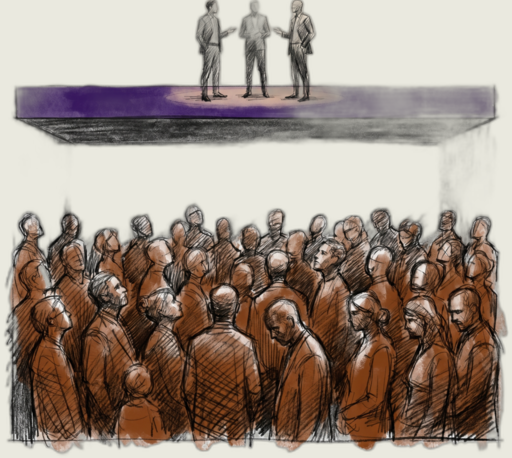
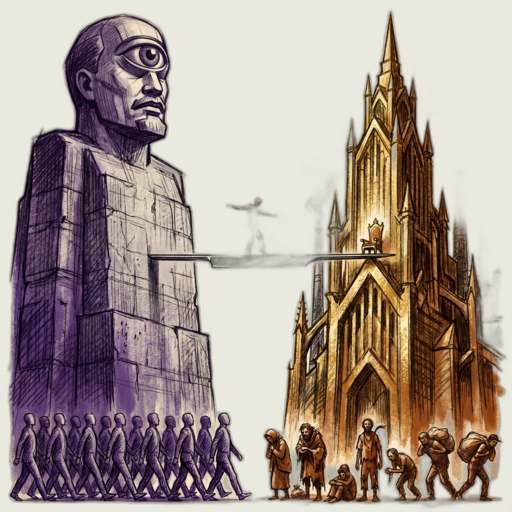
Dennett knows this is impossible. The image above is from a talk he did in Edinburgh where he was very clear about this. He accepts the world to be effectively deterministic (meaning we gain no freedom from quantum randomness) and he has an elegant way of illustrating it through the slide below.

Here he cleanly captures the fact that the main type of free will that people have been talking about for centuries is simply not real, and goes on to say that the one that is real–the one we experience each day–is actually not real. He even goes on to say in the lecture that, “the fake stuff is actually pretty good”, or something to that effect.
So that’s one point: that he’s agreeing with we incompatibilists on our type of free will. But that’s not the part that bothers me. What bothers me is his claim that his species of free will is useful in some way that matters, i.e. from a blame and praise standpoint. To state this another way, if he accepts that the universe is deterministic, and that all outcomes are the result of inputs and laws, then I fail to see how he makes room for moral responsibility.
In my view, his talk of evolutionary biology, competence, evitability, and future creation are all handwaving. Surely these things are true, and surely we’re more evolved in these ways than other animals, but he fails to explain how they provide an escape from physics.
These things ride on top of physics–not below. They are products of it. They are outcomes. And once he has accepted that the physics itself is determined then he must know that all actions we make are determined as well. And he does know this. In fact he embraces it — that’s why he’s a compatibilist.
How then does he salvage moral responsibility from this? Let’s assume one being is more or less “capable” to predict future, or to make a proper decision. He claims this will determine its ability to avoid things, and thus as we evolve we get better at doing so.
Great. Well done. So what?
One’s capabilities are a function of inputs that he did not control. One’s ability to predict future is precisely the same. None of the components that make up the agent were in the control of the agent. So when a decision is made using one’s “capabilities” they are simply doing what they can with with what they have.
Someone. Anyone. Please explain to me how we get moral responsibility from this. I simply cannot see how he could conjure that interpretation.
I throw myself at the feet of the Internet. Show me what I’m missing.
::
New Year’s Resolutions | Patrick Rothfuss
By Daniel Miessler on January 10th, 2012: Tagged as Philosophy | Writing
1. I’m going to hang out with Oot at least two hours every day. I’m going to make it a priority, rather than something I try to fit in around the edges of the other stuff I have going on in my life.
2. I’m going to do my damnedest to hang out with my friends at least twice a month for the express purpose of playing games, hanging out, watching movies, and just generally dicking around.
3. I’m going to start exercising at least three times a week. Because, y’know, I don’t really want to die from author-related sitting-on-my-ass-ness.
You must read this whole post.
Sam Harris’ Free Will Book Coming in February
By Daniel Miessler on December 12th, 2011: Tagged as Free Will | Philosophy
Naturally, I am fairly silly with anticipation for this book. Sadly it’s for pretty poor reasons, as I think he’s going to mirror my exact position — albeit with much more time spent on his arguments and better prose.
I do look forward to having some additional support for my position, though. He’ll spend time gathering data to support his arguments, which I do only in the form of a link to this or that.
I basically anticipate an extremely high-quality summary of my numerous articles, posts, and debate interactions on this topic.
The Worst Way to Waste Time
By Daniel Miessler on December 4th, 2011: Tagged as Philosophy
There are many things to regret as one nears death, but I understand people tend to regret most the things they didn’t do rather than those they did.
You may be thinking now of activities, such as jumping out of an airplane, applying to become an astronaut, or moving to Europe to be with an early lover. But I don’t think these are the most dangerous threats to a peaceful death.
The real peril isn’t in not doing certain activities before you die — it’s in not appreciating the activities you are doing. Whether we are sleeping, holding children, reading books, baking cookies, laughing with friends, touching a lover, taking a walk by yourself, or even performing some menial task so that the things above are possible — these things all must be appreciated.
When you look back on your life you must know that it was rich with experiences, and the only way for that to occur is if you enjoy each of your years, your months, your weeks, your days, your individual moments.
Be appreciative of your ability to experience life. The alternative is nothingness, and that’s precisely what awaits us when we are gone. Don’t wait for it to be upon you to realize this. ::
Cultivating Gratefulness | TED
By Daniel Miessler on November 14th, 2011: Tagged as Love | Philosophy
How I See Class
By Daniel Miessler on November 6th, 2011: Tagged as Culture | Philosophy | Science

I recently read perhaps the best book ever written on the American class system, and it set me to thinking quite a bit about the subject.
First, I put this together as a capture location for what I learned.
Then I began to process it. The concepts listed there are appealing to me for a very basic reason: I am obsessed with growing my ability to predict unseen behavior based on observed behavior. It’s modeling. Class models us, and to the extent that it does that accurately I am interested in it.
So that’s one piece.
Another angle to this, however, is what I ultimately find to be respectable in life, and this question doesn’t really have much to do with class. Namely, I value more than anything the exploration of our world, a pursuit of understanding, a respect for logic and reason, compassion for our fellow humans and creatures on this planet, and overall a sense of appreciation for the world and the fact that we’ve been given the privilege of living in it for a spell.
Many people at the bottom layers of “class” excel at this, and many at the top are fairly horrible individuals. In my mind, this class structure (how much you care about compassion and knowledge) is without question superior to the material class discussed in the book. It is true that the book does touch on some of these behaviors, but that’s not its main focus.
I suppose what I’m saying is that material class as discussed in the book is a means of anticipating additional behaviors, be they positive or negative, and I find that fascinating. Furthermore, those types of behaviors that are correlated with success or failure should be evangelized or looked down upon based on how they tend to manifest.
This is quite in line with The Moral Landscape, which promotes using science to help increase happiness and reduce suffering.
I’d like to come up with some sort of visual way of describing these various behaviors and traits in terms of their ultimate worth (in my view). Perhaps mapping the presence of books in the home to one thing, or the belief that the poor deserve to be poor as another. Or mapping the willingness to try exotic foods to education level, or the preference for sugary foods to salary.
Actually, that’s not quite it. That’s all within the realm of material (the book). I want to map those to the real class designations, i.e. caring for others, producing art or literature, producing tools for doing the above, etc.
This is all very interesting to me. I’m eager to hear your thoughts.
::
Reflective Equilibrium (Stanford Encyclopedia of Philosophy)
By Daniel Miessler on November 5th, 2011: Tagged as Philosophy
The method of reflective equilibrium consists in working back and forth among our considered judgments (some say our “intuitions”) about particular instances or cases, the principles or rules that we believe govern them, and the theoretical considerations that we believe bear on accepting these considered judgments, principles, or rules, revising any of these elements wherever necessary in order to achieve an acceptable coherence among them. The method succeeds and we achieve reflective equilibrium when we arrive at an acceptable coherence among these beliefs.
Who Are You? | Scott Adams
By Daniel Miessler on October 21st, 2011: Tagged as Philosophy
Have you ever wondered who you are? You’re not your body, because living cells come and go and are generally outside of your control. You’re not your location, because that can change. You aren’t your DNA because that simply defines the boundaries of your playing field. You aren’t your upbringing because siblings routinely go in different directions no matter how similar their start. My best answer to my own question is this:You are what you learn.If all you know is how to be a gang member, that’s what you’ll be, at least until you learn something else. If you become a marine, you’ll learn to control fear. If you go to law school, you’ll see the world as a competition. If you study engineering, you’ll start to see the world as a complicated machine that needs tweaking. I’m fascinated by the way a person changes at a fundamental level as he or she merges with a particular field of knowledge. People who study economics come out the other side thinking a different way from people who study nursing. And learning becomes a fairly permanent part of a person even as the cells in the body come and go and the circumstances of life change.
Steve Jobs on Doing What You Want To
By Daniel Miessler on October 5th, 2011: Tagged as Philosophy
Remembering that I’ll be dead soon is the most important tool I’ve ever encountered to help me make the big choices in life. Because almost everything — all external expectations, all pride, all fear of embarrassment or failure – these things just fall away in the face of death, leaving only what is truly important. Remembering that you are going to die is the best way I know to avoid the trap of thinking you have something to lose. You are already naked. There is no reason not to follow your heart.
Epic.