A Must Read by Robin Hanson
By Daniel Miessler on April 20th, 2009: Tagged as Future | Philosophy | Technology
An interesting collection of stuff to think about, by Robin Hanson:
http://hanson.gmu.edu/wildideas.html
On similar topics is one of my favorite essays of all time, by Bill Joy:
Why the Future Doesn’t Need Us
::
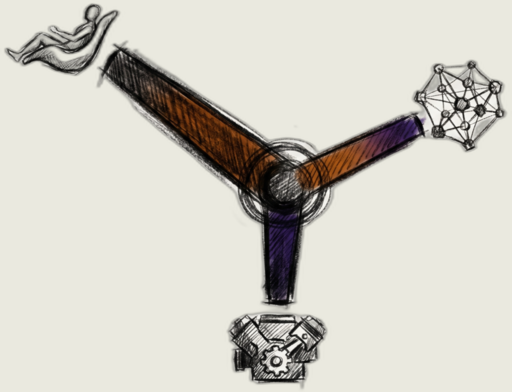
The Steam, Water, and Ice of Messaging: What Are the Real Differences Between Communication Mediums?
By Daniel Miessler on March 30th, 2009: Tagged as Future | Technology

Image from particlemechanics.com
A friend recently forwarded me an email I sent to him in 2004. It was part of conversation about where messaging was going, e.g. texting vs. email vs. voice, etc. Specifically we were discussing how South Koreans thought email was for old people, and that they were using SMS as their primary method of communication:
Here’s what I wrote:
Soon, it’ll just be information, and where you are when you get it won’t matter all that much. The only difference between getting it at home and getting it while SCUBA diving will be the frills on the interface.
So this raises the question: what are the real differences in messaging? Why are there even still distinctions between types of messages? Why is email called email, when most people just use it for text? WhLet’s start with a list of differentiators:
Medium Capabilities
- Media Support: text, rich formatting, images, voice, video, *hologram
- Endpoint Addressing: email address, phone number, *PersonalID
- Client Capabilities: mobile phone keyboards, full home keyboards, microphones, mobile phone displays, home displays
…and now the implementations:
Existing Technologies
- Text Messaging
- Voicemail
- IM
In other words, why can’t email do voicemail? Why can’t “text” messages handle rich text? Why can’t you send text in a voicemail? Etc. What are the fundamental lines that cannot be blurred?
And if any such lines exist, why do they? Are they not just limitations of implementation, and not of any inherent distinctions?
It’s All About the Human
So the answer is that there were really three reasons for these distinctions being created between email, IM, texting, and voice.
- It’s just how the technology evolved. We had email before mobile phones, so it came before SMS, etc. Same with voicemail; it came naturally given the fact that we already had a teleophone system.
- Related to that is the issue of technology permeation. You can only use mediums that other people are using as well, so it depends on the infrastructure being there.
- Capabilities are constrained by the limitations of human-to-device interface. So we haven’t been doing full video on mobile phones until recently because the devices couldn’t handle it, but now they increasingly can. Not to mention the networks the content has to traverse.
Consolidation
The point of highlighting all these distinctions is to show that they are going away, and what will remain is a system where all devices will have the ability to create and display all of the various types of media.
At that point it’ll just be messaging. Not email. Not text. Not video. Not voice. Just a message that happens to be in one of these formats.
All systems, including your personal device (it won’t be called a phone for much longer) will be able to create messages in all of these formats, as well as view them as well. And of course your main systems at home will have the same capabilities, albeit with better processing, input, and output capabilities.
The main difference right now between texting and email is not the character limit or the media that’s supported; it’s the destination. Email requires an email address, whereas texting requires a phone number. And each of these have different privacy models. That’s where services like Google Voice come in.
The Future
The future is much simpler when it comes to messaging: you’ll have an identifier and people will send messages to it. From there you’ll have a set of rules to govern which types of messages, and from whom, get sent to you at which times and on which devices.
So it’ll be something like:
- If the message is from anyone at work, and it’s the weekend, send any voice messages to my main queue, but if it’s text (that’s alphabet text, not SMS) then send it to my personal device (including the transcriptions of the voice messages).
- If the message is from an unknown caller, transcribe all formats and place them in my queue after 6pm, otherwise send them to my personal device for screening.
- If the message is from my wife, always send all formats to my personal device, at any time.
- If the messages is from one of my friends, send text transcriptions to me, but all other formats to my queue for review.
etc.
The only distinction at that point will be human interface issues, i.e. type vs. speak vs. listen vs. watch, and the constraints of doing each of those during your day to day life. ::
A Personal Sixth Sense Device
By Daniel Miessler on March 11th, 2009: Tagged as Future | Technology
Absolutely stunning. Kind of like Minority Report meets Down and Out in the Magic Kingdom.
Microsoft Showing Off Their Future Vision
By Daniel Miessler on March 4th, 2009: Tagged as Future | Microsoft | Technology
To be clear, it’s less than vaporware. It’s more like a CG animation of what vaporware would look like, as described by a character in an overly ambitious scifi novel (that doesn’t exist).
But still. Pretty damn cool. ::
Why People Like Kurzweil Get it Wrong
By Daniel Miessler on December 22nd, 2008: Tagged as Future | Psychology
This post shows someone expressing disappointment with some future predictions given by Kurzweil back in 1999. Here they are as documented by the poster:
- Individuals primarily use portable computers
- Portable computers have dramatically become lighter and thinner
- Personal computers are available in a wide range of sizes and shapes, and are commonly embedded in clothing and jewelry, like wrist watches, rings, earrings and other body ornaments
- Computers with a high-resolution visual interface range from rings and pins and credit cards up to the size of a thin book. People typically have at least a dozen computers on and around their bodies, which are networked, using body LANS (local area networks)
- These computers monitor body functions, provide automated identity to conduct financial transactions and allow entry into secure areas. They also provide directions for navigation, and a variety of other services.
- Most portable computers do not have keyboards
- Rotating memories such as Hard Drives, CD roms, and DVDs are on their way out.
- Most users have servers on their homes and offices where they keep large stores of digital objects, including, among other things, virtual reality environments, although these are still on an early stage
- Cables are disappearing
- The majority of texts is created using continuous speech recognition, or CSR (dictation software). CSRs are very accurate, far more than the human transcriptionists, who were used up until a few years ago
- Books, magazines, and newspapers are now routinely read on displays that are the size of small books
- Computer displays built into eyeglasses are also used. These specialized glasses allow the users to see the normal environment while creating a virtual image that appears to hover in front of the viewer
- Computers routinely include moving picture image cameras and are able to reliably identify their owners from their faces
- Three dimensional chips are commonly used
- Students from all ages have a portable computer, very thin and soft, weighting less than 1 pound. They interact with their computers primarily by voice and by pointing with a device that looks like a pencil. Keybords still exist but most textual language is created by speaking.
- Intelligent courseware has emerged as a common means of learning, recent controversial studies have shown that students can learn basic skills such as reading and math just as readily with interactive learning software as with human teachers.
- Schools are increasingly relying on software approaches. Many children learn to read on their own using personal computers before entering grade school.
- Persons with disabilities are rapidly overcoming their handicaps through intelligent technology
- Students with reading disabilities routinely use print to speech reading systems
- Print to speech reading machines for the blind are now very small, inexpensive, palm-size devices that can read books.
- Useful navigation systems have finally been developed to assist blind people in moving and avoiding obstacles. Those systems use GPS technology. The blind person communicates with his navigation system by voice.
- Deaf persons commonly use portable speech-to-text listening machines which display a real time transcription of what people are saying. The deaf user has the choice of either reading the transcribed speech as displayed text or watching an animated person gesturing in sign language.
- Listening machines cal also translate what is being said into another language in real-time, so they are commonly used by hearing people as well.
- There is a growing perception that the primary disabilities of blindness, deafness, and physical impairment do not necessarily. Disabled persons routinely describe their disabilities as mere inconveniences.
- In communications, translate telephone technology is commonly used. This allow you to speak in English, while your Japanese friend hears you in Japanese, and vice-versa.
- Telephones are primarily wireless and include high resolution moving images.
- Heptic technologies are emerging. They allow people to touch and feel objects and other persons at a distance. These force-feedback devices are wildly used in games and in training simulation systems. Interactive games routinely include all encompassing all visual and auditory environments.
- The 1999 chat rooms have been replaced with virtual environments.
- At least half of all transactions are conducted online
- Intelligent routes are in use, primarily for long distance travel. Once your car’s computer’s guiding system locks on to the control sensors on one of these highways, you can sit back, and relax.
- There is a growing neo-luditte movement.
I think the reason these predictions fail, and many similar types of predictions I’ve made myself, is that we as intellectuals and optimists think other people work the same way we do. We make a faulty assumption that it just takes a little progress before people will catch on and see the benefits of a given type of progress–and that then they’ll take notice and give resources to accelerate the pace of advancement.
That’s fantasy.
Reality has within it an inherent friction to progress, and all optimists underestimate the resting inertial mass of “it’s how we’ve always done it”. And as much as we, as optimists and futurists, are able to logically accept this as a real obstacle, we still fail to take it into account when we give predictions about the future.
Aug and Naug
By Daniel Miessler on May 31st, 2008: Tagged as Future | Technology

In the future, after we’ve started integrating computers into our brains to enhance them, we’ll develop a concept of aug and naug (augmented, non-augmented), pronounced and likely spelled: og and nog.
The terms will apply to the measure of human mental achievement, specifically to specify whether a particular mental feat or accomplishment was attained with or without the help of computers.
Jason: Hey, I scored a 2043 on my MART exam today…
Daniel: Nice, but that was aug, right?
Jason: Yeah, no shit. If I did over a 2000 naug I’d be a God.
These terms are likely to be adopted for a few reasons:
- They clearly describe the concepts of natural vs. supplemental
- They’re both only one syllable
- The “n” sound in front of “naug” or “nog” is fairly easy to differentiate from “aug/og” when spoken
19.20.21
By Daniel Miessler on November 12th, 2007: Tagged as Civilization | Culture | Future | Technology
A worthy way to spend a few minutes.
[ 19.20.21 ]
The Future is Divided
By Daniel Miessler on August 23rd, 2007: Tagged as Culture | Future | Society | Sociology
First off I’ll just say that I’m really bad at this. I seem to fail to take into account the most important variables while latching on to the most inconsequential. That being said I’m going to have a go anyway. I’m seeing a number of trends that I want to try and hash out.
Be aware: this is me thinking out loud. An academic paper this is not.
–
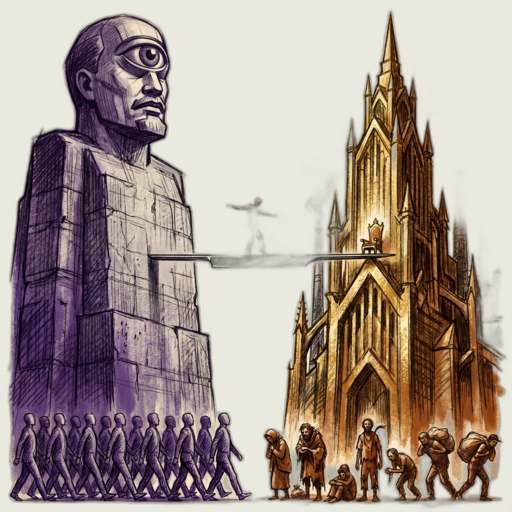
- A massive move toward social division along class lines. And yes, this divide has always existed; I’m saying it’s about to get a whole lot more pronounced. This is coming not so much from the rich getting richer, but more from larger and larger groups of people becoming poorer. The key there is that this already large group is reproducing at a very fast pace. This is going to introduce extreme pressure on our already faltering system.
- I see crime in 5-10 years becoming extremely rampant and increasingly violent, with the only counter being an overt militarization of our police forces. I envision a major upsurge in large-scale riots — many of which will be race/class related. I see a culture of revolt rising up in the lower classes, essentially, with this being exacerbated by the fact that much of the middle class is going to be pealing down into the lower class.
- One manifestation of this will be large areas of our country that are simply not safe to be in. This is already the case now to some extent, but I see this becoming dramatically magnified. I see entire halves of cities being partitioned off as hostile — complete with increased security at the boundaries, etc. This of course will add to feelings of isolation and preference. The perception (and reality) will be that the paramilitary police forces will be protecting the rich people from the poor people. And since this will largely be divided down race lines in addition to class lines, that will lead to additional unrest.
- I essentially see dramatic social separation in our future — to the point of the constant threat of riot-level violence. The rich people will isolate themselves off in certain communities and gain the rights to protect themselves with handguns. There will be many more shootings — many justified, many not — all adding to the perception that the rich are able to kill the poor and get away with it.
- Further out we’ll start to see new drugs enter the markets. Drugs that will magnify the differences between the classes even more. Some drugs will be used mostly by the lower classes and will keep them there, i.e. gentle drugs that give a feeling of well-being and still allow you to function. Other drugs will enhance mental abilities such as memory and intelligence. These will largely be too expensive for the lower classes and as a result only the upper class will have them.
- These things will all be accompanied by increased disparities between the groups receiving education. Even fewer of the lower income levels will go to school, and even more of the upper level will. And the ability to gather information will be GREATLY enhanced for the privileged. Not only due to improved technology but because of the cognitive supplements as well. In short, the ignorant will become more ignorant while the smart become smarter.
- What this ultimately leads to is revolution. It leads to civil war. It leads to the massive numbers of the weak revolting against the strong — only to be massacred by the army/police that are wielded by the rich.
So what’s the solution? The solution is one that we don’t have the ability to implement. We, as a society are too encumbered by liberal-minded weakness. We lack the strength to make uncomfortable decisions that will benefit our society as whole.
The solution is to maintain standards for the citizens of our republic. The solution is to temporarily stop bringing more people into this country. To raise everyone who’s on the bottom up to the middle. To say to them that they are American and that we expect much from them. To synchronize our country on a single vision. We need to re-inject the concept of personal responsibility into our discourse. We need to shun those who act like children when they are adults.
We need to stop encouraging children to have children. We need to chastise those who would complain on one hand about not having enough in life, and then go to the club and make a baby. These people need to be humiliated. Don’t pass laws. Don’t punish them legally. Make them feel shame for the disservice they are doing to this country. We must put a stop to it.
Kids raising kids leads to poor parenting. Poor parenting leads to poor education because the teachers fear the parents’ ability to sue. This erodes the entire educational system. It essentially means that our entire country is being filled full of absolute morons. Morons who are easy to manipulate and stir into a frenzy.
A country full of morons who are easy to manipulate means that our political system is useless. Our system is based on informed, intelligent, responsible citizens who think for themselves. Without this democracy is a sad joke. Without an educated and independent voting base politicians will become unable to make REAL decisions that hinge on complexity. They’ll be forced to placate the masses via deception and trickery. Oh wait, that’s already happening.
Essentially the country is becoming a giant shit hole. We’ve relaxed our standards. We don’t demand excellence. We don’t have an identity. And if someone doesn’t figure this out very soon our precious America is going to devolve into a class-divided police state full of illiterate masses managed by a hyper-elite upper class with an eye for extermination.
Sad times are upon us.:
Aerogel: The New Miracle Substance
By Daniel Miessler on August 19th, 2007: Tagged as Chemistry | Future | Physics | Science
A MIRACLE material for the 21st century could protect your home against bomb blasts, mop up oil spillages and even help man to fly to Mars. Aerogel, one of the world’s lightest solids, can withstand a direct blast of 1kg of dynamite and protect against heat from a blowtorch at more than 1,300C. Scientists are working to discover new applications for the substance, ranging from the next generation of tennis rackets to super-insulated space suits for a manned mission to Mars.
[ Scientists hail ‘frozen smoke’ as material that will change world ]