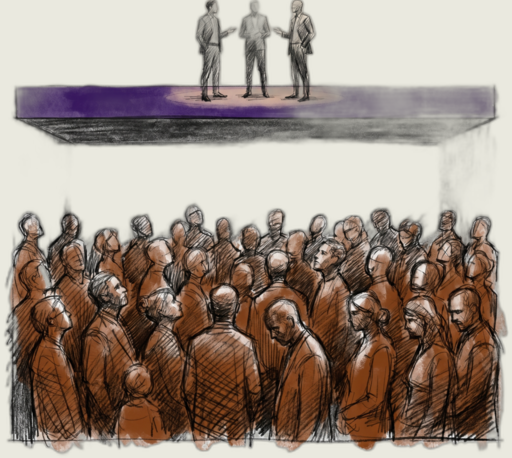
Education in America
By Daniel Miessler on July 26th, 2011: Tagged as America | Education
Why Unemployment Matters | The Atlantic
By Daniel Miessler on July 17th, 2011: Tagged as America
That’s why long-term unemployment has become such a problem. Our unemployment problem is not, as in previous recessions, that too many people are entering unemployment. Layoffs and discharges are actually lower than they’ve been in a decade. Rather, our problem is that people aren’t exiting unemployment. And that’s a much bigger issue.Human capital is like almost any other form of capital: it is a depreciating asset. The longer you stay out of the workforce, the less valuable you are to potential employers. You lose market intelligence and industry connections. Your technical knowledge and skills atrophy.
This article captures the unemployment situation in a way that I’ve not seen anything else do.
Two Minds on the Suffering Class
By Daniel Miessler on June 15th, 2011: Tagged as America | Culture | Politics
I frequently find myself of two minds when faced with those who are suffering from poverty and lack of education, and these depend heavily on my mood and state of mind. If I’m in a poor or aggressive mood I tend to quietly condescend, taking notes of the various indicators of class and filling in the blanks of the person’s life.
Hasn’t read a book since grade school, check. Loves team sports, check. Loves Jesus, check. Groups and dislikes ethnic groups other than his/her own, check. Pretty standard, really.
Then I imagine how much suffering this person commonly endures. Low pay, low station in work, He doesn’t smile. He works three jobs for crap pay to barely afford rent and beer and cable. I wonder why it is that this person exists, and why it is that people think it’s normal and ok for him to create offspring with impunity. To me, he’s in pain and he’s bringing more of that pain into the world.
Lately I’ve been catching myself when thinking such things, and it’s rather unpleasant. Don’t I reject absolute free will? Doesn’t my belief system dictate that this person doesn’t have an option? Yes. Well, then what kind of idiot accepts this as truth and then still gets upset by watching dominoes fall? My kind, evidently.
I then ease myself into a much more healthy, empathic state of mind–one in which my ideas turn to offering help of some sort.
But on re-evaluation, I feel it’s ok to notice the insidious nature of poverty and ignorance. And it’s ok to observe and analyze the ways these things manifest in individuals and groups. But it’s only ok if the purpose is to learn about a problem and trying to fix it. It’s not ok to just stare and turn up one’s nose–or scowl, in my case.
So this is how I go through life looking at failures to live the good life of love guided by knowledge. I move unpredictably between the worlds of elitism and sympathy. I simultaneously want to identify, call out, and address these manifestations of ignorance and suffering, but I feel bad about even calling attention to it. So I’m left to act like a good San Francisco liberal and pretend the suffering taking place 20 miles away isn’t all that bad.
The places on the news are bad, but it’s ok for countless poor and ignorant people five minutes from me to barely speak the national language, toil their lives away doing physical work for minimum wage, waste most of their money on alcohol and lottery, and pine for a large family. That’s ok, right? Let’s not talk about that. No, let’s pretend those people don’t exist.
I want these people not to suffer, and I want them to stop creating more suffering. And I want people to realize that they’re here and that they’re not happy. Pregnant, working at McDonalds, with more kids at home, not speaking the language, with no education. I often feel like a criminal going through that drive through. Like I’m willfully participating in the illusion that there’s nothing wrong with that picture. It’s a fucking travesty. It’s a travesty that she lives that life, and that she’s likely creating more to live one just like it.
Seeing it makes me angry. Seeing it hurts me. I respond with disdain, but then I see how innocent and faultless this person is. She did nothing wrong and she has no options. She’s in pain because she rolled bad dice, and I’m in my nice car at the window because I got as lucky as she did unlucky.
Shame on me for being angry. Shame on me for noticing all the signs of her failure and lack of sophistication. She has those characteristics because she was unlucky, and I noticed them because I wasn’t. I don’t deserve anything good, and she doesn’t deserve anything bad.
It’s all luck. The prosperous are the fortunate; they are one and the same.
So all I have left is pity, but pity doesn’t spawn action. It spawns complacency and politically correct avoidance of problems.
I need to determine how it is that I can stay observant of the world, and notice it’s patterns of failure and suffering, while simultaneously maintaining my mentality of empathy and thankfulness.
I abhor those who fail to notice how destructive these lifestyles are, and how they propagate suffering throughout the world. But I dislike even more the guy who sees it and gets turned into a snob by the information. I have news for you, snob. You’re lucky and nothing else.
I am both of these people at different times. I’m mostly the compassionate one, but too often the haughty one, and I don’t like either. If you’re empathic and compassionate without seeing the cycle of pain this person is contributing to, then you’re part of the problem. And if you see the problem but don’t do anything but analyze the ways the person is beneath you then you’re just another delusional asshole sold on the concept of “deserving” something.
Don’t be either. Be better somehow. ::
50% of Americans Couldn’t Come Up with $2,000 | The Atlantic Wire
By Daniel Miessler on May 24th, 2011: Tagged as America
Nearly half of Americans are living in a state of “financial fragility,” a new paper by the National Bureau of Economic Research reveals. To determine this statistic, researchers from the George Washington School of Business, Princeton University, and Harvard Business School asked survey participants whether they would be able to come up with $2,000 for an “unexpected expense in the next month.” 22.2 percent predicted they would be “probably unable” and 27.9 percent said they’d certainly be unable to foot the unplanned bill. The hypothetical cost “reflects the order of magnitude of the cost of an unanticipated major car repair, a large co-payment on a medical expense, legal expenses, or a home repair.” But, it was the participants’ method of coping that really determined their fragility:
Taken together with those who would pawn their possessions, sell their home, or take out a payday loan, 25.7% of respondents who were asked about coping methods (equal to 18.6% of all respondents) would come up with the funds for an emergency by resorting to what might be seen as extreme measures,” the authors write. “Along with the 27.9% of respondents who report that they could certainly not cope with an emergency, this suggests that approximately 46.5% of all respondents are living very close to the financial edge.
And 50% don’t believe in evolution. I wonder what the overlap is…
Here’s How Corporations Dodge Taxes [INFOGRAPHIC] | Mashable
By Daniel Miessler on May 15th, 2011: Tagged as America | Economics | Politics
Idiot Republican from Alabama Wants to Change Pi to 3
By Daniel Miessler on March 22nd, 2011: Tagged as America
Roby, raised in Montgomery, Ala., is on the House Committee on Education and the Workforce, and the Subcommittee on Early Childhood, Elementary and Secondary Education.
“It’s no panacea, but this legislation will point us in the right direction. Looking at hard data, we know our children are struggling with a heck of a lot of the math, including the geometry incorporating pi,” Roby said. “I guarantee you American scores will go up once pi is 3. It will be so much easier.”
[ This one got me...Before I saw the comments indicating it was fake I was about to quit my career and become a political activist. ]
On American Jobs
By Daniel Miessler on February 25th, 2011: Tagged as America
I maintain the problem in this country is lack of regulation, a government which pimps out its people to runaway corporate monstrosities. Corporations have all the control and they use and dispose of human beings as they see fit.
We have been told the only way is a global economy, it’s really too complex for us simpletons to get it, but for real honest and truly it benefits all of us to globalize the economy. It’s good for americans to allow companies to set up shop in countries with abominable standards of living and human rights, where these corporations can pay people bullshit for the same labor.
Americans cant find jobs because companies ARE NOT HIRING AMERICANS.
If you physically produce products, the manufacturing is in some third world shithole hiring people who they can pay pennies, and merely fire when lose a hand during the manufacturing process.
If you produce a skilled service, then immigrants from the third world have immigrated here and are now working for less money, with less benefits, while you sit around with your thumb up your ass holding out for a job where you are treated like a human being. Not likely when hatians will work for nothing and tolerate standards of living which are far below that of americans.This old man pining away about an enterprising productive spirit absent in todays young people as the cause of the current employment problem… sounds just like an old man pining away, full of utter shit. People in his generation found it easier to find work, because people in his generation didn’t have to compete with hatians working for much less in terms of monetary compensation benefits or respect. People in his generation got educated, and competed only against americans, and there were jobs in america then.
There is a reason the media (which is to say, the government/rich/corporate class) has ridiculed and satirized to unspeakability the stereotype of the disgruntled american worker who is weary of immigrants and corporations setting up manufacturing in third world dumpsters. The reason this line of thought has become a joke is because it is infuriatingly correct, and the parasite class depends on us never waking up and figuring that out.
Follow it through for the full comment.
America by the Numbers | NYT
By Daniel Miessler on January 9th, 2011: Tagged as America
Information Processing: Supercomputers and the mystery of IQ
By Daniel Miessler on December 29th, 2010: Tagged as America | China
Some of the world’s fastest supercomputers are being set up in Hong Kong to address the age-old mystery of human intelligence.The study of intelligence quotient (IQ) is being conducted by BGI Hong Kong, [formerly] known as the Beijing Genomics Institute. It will survey DNA samples from 1,000 child prodigies from China’s best high schools, comparing them with samples from 1,000 children of average intelligence, searching for genetic variations.
The study will examine protein coding genes of the extremely smart children, many of whom are expected to enroll at Harvard, Yale or Cambridge. The results will be correlated with each youngster’s school test scores, in hopes of learning how specific genetic variations affect intelligence.
Yet another way we’ll watch China pass us by. They’re taking over Africa, becoming a manufacturing powerhouse, and now looking into how to engineer their children to be smarter.
Meanwhile, we have Dancing With the Stars.